
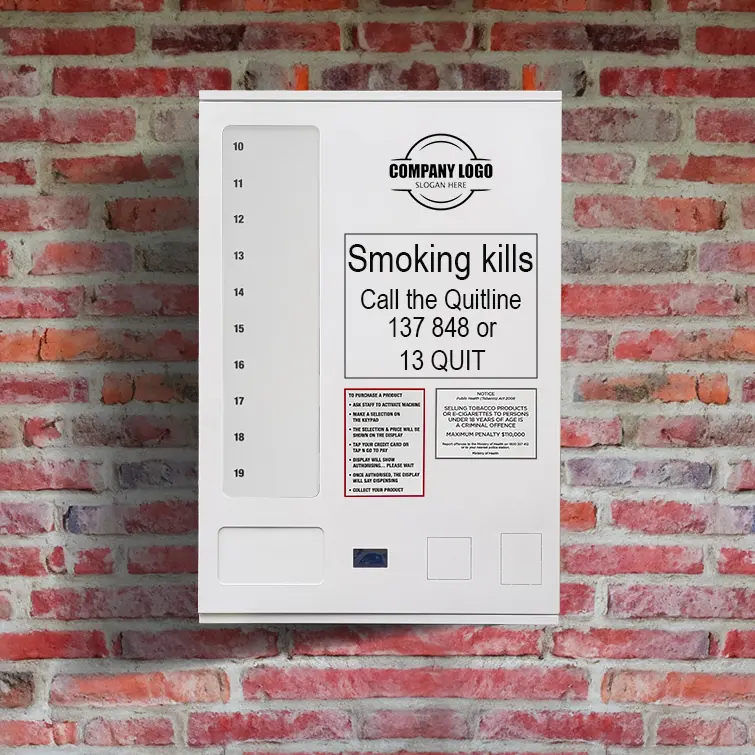
What “age-verified vending” actually means
The request turns up in almost these words: vending with age verification — I can’t find any local offers. An age verification vending machine is hard to find because age verification is not a part number. It is three separate decisions that happen to be implemented in one machine:
- The check — how the machine becomes satisfied that the person in front of it is old enough.
- The record — what is written down about that check, who can read it, and how long it is kept.
- The failure behaviour — what the machine does when the check does not pass, or cannot be made at all.
Only the first of those looks like a feature. The other two are where deployments go wrong, and they are the ones a catalogue listing never mentions.
The rule that governs all three is set where the machine is installed, not where it is built. That is why this page describes approaches and decisions rather than a compliant product: we build to the compliance requirement you state, and we do not certify that a machine meets any national or state age-restriction law. No manufacturer can honestly do that from another jurisdiction.
Settle the regulatory question first
Before hardware, before the cabinet, before the quotation, get an answer to one question from your regulator, licensing authority or legal adviser:
For this product, at this type of site, in this jurisdiction — what check satisfies you, and what must be recorded?
The answer decides everything downstream. It varies by place and by product: alcohol, tobacco and vaping, lottery and gaming, adult products, knives and solvents, and some medicines each sit under different instruments, and some categories cannot be sold unattended at all in some jurisdictions no matter how good the check is. For medicines specifically, medicine vending machines covers how OTC, pharmacist-only and prescription products change the release model. It also varies by site type — a licensed venue with staff on the premises is a different proposition from an unattended machine in a public corridor, and several regimes treat them differently.
If a supplier tells you their machine is compliant with your law without having read your law, they are telling you something they cannot know. What a manufacturer can usefully commit to is the specification: this check, this record, this retention, this behaviour on failure — written on the quotation.
The five verification approaches
| Approach | How it works | Strength of check | Where it fits |
|---|---|---|---|
| On-screen declaration | The user confirms their age on the machine screen before the vend is released | Weakest — a declaration, not a verification | Only where the applicable rule accepts a declaration; also used as an additional prompt alongside a real check |
| Staff release | Venue staff authorise the vend from an attendant interface, having checked ID themselves in person | As strong as the person doing it | Licensed premises, clinics, duty-free and other sites where staff are present anyway |
| Pre-verified account | Age is checked once, by a person, at enrolment; the machine then reads an RFID card, membership scan or PIN and checks entitlement | Strong, and repeatable without re-checking | Members’ clubs, workplaces, closed communities, subscription programs |
| Off-machine verification | The user is verified in an app, on a web page, by SMS or through a QR code, and arrives with a code or token the machine will accept | As strong as the verifying service | Unattended sites, public venues, events, screen-free cabinets |
| ID document scan | A document reader at the machine reads or authenticates an identity document at the point of sale | Depends entirely on the reader and the service behind it | Where the rule requires a document to be produced at the moment of sale |
These are not mutually exclusive. A common arrangement is a pre-verified account for regulars plus an off-machine verification path for first-time users.
On-screen declaration
The cheapest and the weakest. It is worth being blunt: a button that says I am over 18 verifies nothing. It is defensible only where your regulator has said a declaration is sufficient, and it is otherwise useful as a supporting prompt — a place to display the legal notice, the warning text and the licence details that some jurisdictions require to be shown at the point of sale.
Staff release
Where a site already has staff, the strongest available check is often the one that already happens: a person looks at an identity document. The machine’s job in that arrangement is to be the thing that cannot be bypassed — the stock stays behind a locked door, no self-selection is possible, and the item is released only after a staff authorisation.
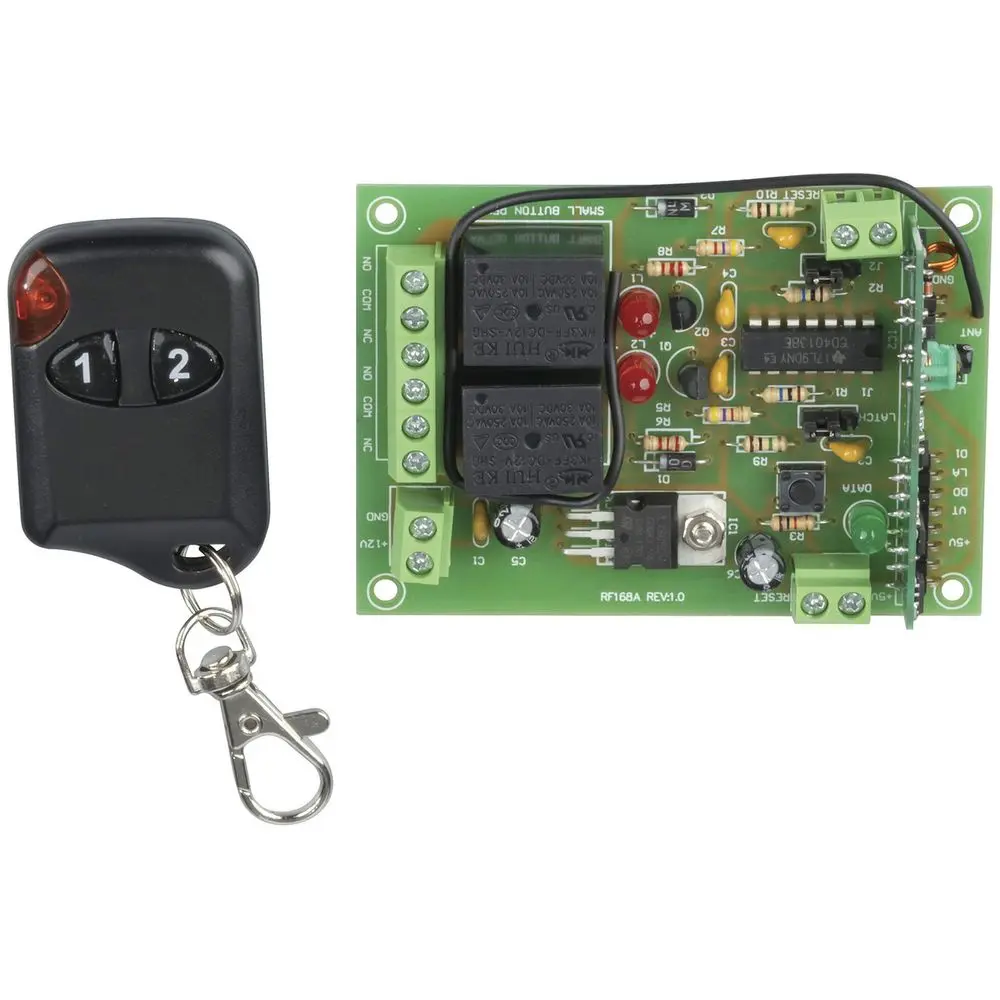
This also gives an operator a clean lever for trading hours. Payment and release methods can be enabled and disabled per machine from the cloud dashboard, so a machine can be permitted to trade in staffed hours and refuse outside them.
Pre-verified account
This is the most robust pattern for a known population, and it is the one we run most often, because it is the same mechanism as industrial entitlement control. Age is verified once, by a person, when the account is created. After that, the machine authenticates the individual — RFID card, PIN, or a scanned membership credential — and checks what that person is entitled to collect.
We built a QR code reader add-on for a business that wanted exactly this shape: members scan their mobile membership at the machine, the system checks their status in the database, and entitled members receive their allowance — in that case three lucky dips per 24 hours. The mechanism is identical whether the entitlement being checked is a promotional allowance, a PPE quota or an age status.
The advantage is that the difficult part — establishing who someone is and how old they are — happens once, in a context where it can be done properly, rather than being attempted by a machine in a corridor. The limitation is that it only works for a population you can enrol.
Off-machine verification
The user’s phone does the work, and the machine acts on the result. This is the pattern behind most of the unattended deployments we have built:
- A liquor company deploying machines at events needed to meet Responsible Serving of Alcohol requirements. We built a QR code system with a mobile web front end, including Apple Pay and Google Pay, so the transaction and the surrounding checks happened on the customer’s own phone rather than on the machine. See QR code responsive serving of alcohol.
- A health agency issuing free kits needed a per-person monthly quota. Users sign up once with an email address or mobile number and receive a reusable access code, which the machine accepts and counts against their quota. See free vends with a monthly quota.
- A business group wanted machine access authorised against its own employee database rather than against ours — the machine asks an external system whether to release the item, and does what it is told. See SMS2Vend with external validation API.
That third one is the architecturally important case. If your age decision already exists somewhere — in a members’ database, a licensing system, a government identity service, or a commercial verification provider — the machine does not need to reimplement it. It needs to ask, and to honour the answer. That is an integration, scoped to your system, not an off-the-shelf module.
ID document scan
Where the rule requires a document at the point of sale, a reader goes on the machine, making it an ID verification vending machine. Our kiosk platform is Android-based and open, and peripherals of this class are already integrated on kiosks we build for transport operators — barcode scanners, RFID readers, passport scanners and thermal printers.
Two cautions, both of which belong in the specification rather than in a brochure:
- Reading is not authenticating. Extracting a date of birth from a barcode or a chip is straightforward. Establishing that the document is genuine and belongs to the person holding it is a different problem, generally solved by a verification service. The accuracy claim for that service belongs to its vendor, and the decision to accept it belongs to your regulator. We integrate the service you nominate; we do not publish an accuracy figure of our own.
- Scanning has a privacy cost. A document scan puts identity data at the machine, which is exactly what the account-based and off-machine patterns avoid. In privacy-sensitive regimes that cost can outweigh the benefit, and it is worth confirming what you are permitted to capture before you commit to capturing it.
What the operator has to decide
These are the specification points. Bring answers to these and a quotation can be written; bring only “we need age verification” and it cannot.
| Decision | What to state |
|---|---|
| The accepted check | Which of the approaches above satisfies your regulator, and whether more than one path is permitted |
| What is logged | Whether the record holds an identity, a token, or only the fact that a check passed at a given time |
| Who can read the log | Site staff, head office, an auditor, the regulator — and through which interface |
| Retention | How long records are kept and what deletes them; your privacy regime sets this, not the machine |
| Failure behaviour | What happens when the check fails, and separately when the check cannot be made because the verifying service is unreachable |
| Per-transaction limits | Maximum units per transaction and per person per period, which is a control in its own right |
| Trading hours | Whether the machine may release restricted items unattended, or only during staffed hours |
| Point-of-sale notices | Warning text, licence details and legal notices your jurisdiction requires to be displayed |
Records, privacy and retention
The instinct is to log everything. In several regimes that is the wrong instinct, and the public health programs we supply are built on the opposite principle: verify eligibility without collecting personally identifying information on the machine at all. Registration happens on a separate web portal, the machine sees a token or an access code, and per-user quotas are tracked against that token rather than against a name.
That architecture transfers directly to an age gate. The identity stays where it was already held and already protected. The machine receives a yes or a no, and records that a valid check occurred.
Whatever you decide, the machine’s transaction record is the same one every KioskForce machine writes: items, quantities, machine, location, time, order state and receipt ID. What varies is how much identity is attached to it. Attach the minimum your rule requires — it is easier to defend, and it is less to lose.
When the check cannot be made
Design this case explicitly. A machine that quietly dispenses a restricted item because the verification service timed out is a worse outcome than a machine that refuses.
On our machines this case resolves the safe way by default: the machine needs its connection to dispense at all, so an outage refuses the vend rather than releasing a restricted item on a check nobody made. Nothing leaves the machine that has not been authorised.
What that costs you is availability, and it is worth deciding which you would rather have:
- Decision made off the machine (external validation, app, real-time lookup): the machine cannot substitute its own judgement, and refusing is the only defensible answer. The payment compatibility matrix on the payments page notes the same dependency for code release.
- Decision already made at enrolment (pre-verified account, entitlement held on the account): the question is only whether the credential is valid, which is a far cheaper thing to check — and the natural fit for offline dispensing when we ship it.
Prefer a pre-verified account where your population allows it. It shortens the compliance path today, and it is the model that will keep working during an outage once offline dispensing is available.
Physical controls that support the gate
An age check is only as good as the stock security behind it. The relevant hardware behaviour is standard on our machines:
- Controlled dispensing, not self-selection. The user never has access to the inventory. The item is pushed to a secure delivery bin, so there is no path to the stock that bypasses the check.
- Per-transaction limits. Capping units per transaction prevents one passed check from clearing the shelf, and per-person quotas over a period extend the same control across visits.
- Locker cells for larger or higher-value items. A cell opens only for the authorised transaction.
- Remote enable and disable per machine. Release methods can be switched from the cloud dashboard without a site visit, which is how a machine is taken out of service quickly if a site’s licence status changes.
- Siting. An unattended restricted-product machine placed where nobody can see it is a different risk from one behind a counter. Where a machine goes is part of the compliance conversation, not a detail to settle afterwards.
Where age-verified vending is the wrong answer
Worth saying plainly, because the honest exclusions are what make the rest of the page usable:
- Where the category cannot be sold unattended in your jurisdiction. No verification method fixes a prohibition. Check this first; it is the cheapest question to ask.
- Where the rule requires a licensed person to make the sale. Then the machine is stock security and a transaction record, and a person still authorises the release. That can be a perfectly good deployment — it just is not an unattended one.
- Where the population cannot be enrolled and the site cannot be staffed and document scanning is not permitted. If all three paths are closed, there is no fourth one.
- Where the volume does not justify the integration. An external verification integration is project-scoped work. For a handful of transactions a week, a staffed counter is cheaper.
What to send with an enquiry
- The product and its packaging dimensions — the restricted item drives the coil or cell configuration as much as it drives the check.
- The jurisdiction and the site type — country, state or province, and whether the position is staffed, semi-staffed or fully unattended.
- The rule you must satisfy, in whatever form you have it — the licence condition, the regulator’s guidance note, the clause in your tender.
- Which check you intend to use, or that you need help comparing the options against that rule.
- The verifying system, if one already exists — a members’ database, a licensing platform, a commercial verification provider — and its API documentation.
- What must be recorded and for how long.
- What the machine should do when the check fails or cannot be made.
- Expected volume per position, which decides whether the integration is proportionate.
Questions to send any supplier
Copy these into your enquiry. The answers separate a manufacturer that will engineer to your requirement from one selling a feature list.
- Which age verification methods have you actually built and deployed, and can you name the deployment?
- Where is the age decision made — on the machine, or by an external system?
- What does the machine do if the verifying service is unreachable? Show me that behaviour, do not describe it.
- What exactly is written to the transaction record when a check passes, and what when it fails?
- Where is that record stored, who can read it, and how is it deleted?
- Can the check, the limits and the retention period be changed after installation without replacing hardware?
- If I nominate a verification provider, will you integrate it, and what do you need from them?
- Will you put the verification specification in writing on the quotation?
- Do you claim compliance with my jurisdiction’s age-restriction law — and if so, on what basis?
Question 9 is the tell. The correct answer is no.
How KioskForce answers each point
| Point | Our answer |
|---|---|
| Methods built | On-screen confirmation, staff-authorised release, RFID card and PIN entitlement, scanned membership credential, SMS and web access codes, QR verification on the user’s phone, and external validation against a customer’s own system |
| Named deployments | A QR-based system for a liquor company with Responsible Serving of Alcohol requirements; a reusable access code with monthly quotas for a health agency; employee-database validation for a business group; identity-lite eligibility checks on Australian public health programs |
| Where the decision is made | Your choice, specified before the build — on the machine, or delegated to your system through an integration |
| Offline behaviour | Specified per deployment. Locally held entitlements can continue offline; externally validated checks should refuse rather than fall back |
| Record contents and retention | Configurable, and written into the specification. Public health builds default to a token rather than an identity |
| Document scanning | Peripherals integrated on request; the verification service is one you nominate, and its accuracy claim is its own |
| Compliance certification | We do not issue one. We build to your stated requirement and put that requirement on the quotation |
| Hardware and software | Both designed in-house, so the check, the interface and the record are ours to change rather than a third party’s |
| Ordering | Minimum order quantity is one unit for standard models and around ten for a full custom design; lead times run 4 to 12 weeks depending on complexity, with software customisation scoped separately |
Age-verified vending guides
Buyer and operator guides on vape, nicotine, tobacco and alcohol vending, ID scanning and age estimation, the law by jurisdiction, cost and running a route.
- Age-Verified Vending in Bars, Clubs and Casinos — Age-verified vending in bars, clubs and casinos: why adult-only venues are where restricted vending is legal, what counts as adult-only, and staff release.
- Alcohol and Beer Vending Machines: Where They're Legal and How They Work — Alcohol and beer vending machines are legal only where the liquor licence allows them, with age and intoxication checks. US, UK, Germany and Japan rules.
- Are Vape Vending Machines Legal? Rules by Country and US State — Are vape vending machines legal? US: adult-only (21+) venues under 21 CFR 1140, some states ban them. UK ban from 29 Oct 2026. Australia, Canada, NZ, Germany.
- Biometric and Facial Age Estimation on Vending Machines — Facial age estimation on vending machines: how it works, Challenge 25 buffer ages, NIST accuracy data, GDPR and BIPA rules, and where regulators accept it.
- Cigarette and Tobacco Vending Machine Laws by Country — Tobacco vending machine laws by country: US adult-only venues, UK and Ireland bans, Germany's technical age check, Japan after taspo, Australian state limits.
- Do Vape Vending Machines Make Money? An Honest P&L — Do vape vending machines make money? Only in venues where the law allows them and sell-through is high. Unit margin, venue commission, licence and risk, worked.
- How Much Does a Vape Vending Machine Cost? — Vape vending machine cost: cabinets from USD 800 to 2,100 at our published prices, plus age check, payment, landed cost, licences and running costs.
- How to Start a Vape Vending Machine Business — How to start a vape vending machine business: check the law first, get state tobacco retailer licences, stock only FDA-authorised products, sign 21+ venues.
- ID Scanning and Privacy: What an Age-Verified Vending Machine Should Store — What an age-verified vending machine should store: the check result, time and machine, not the ID image. Data minimisation, retention, GDPR, CCPA, BIPA rules.
- Nicotine Vending Machines for Pouches: Laws, Formats and Age Checks — Nicotine pouch vending machines: US adult-only venues with FDA-authorised products only, UK ban from 29 Oct 2026, no lawful sale in Australia, plus can formats.
- Self-Serve Beer Taps vs Beer Vending Machines — Self-serve beer taps pour draught beer after staff check ID and load a capped amount; beer vending machines sell sealed cans. How each works and what the law says.
- Vape Vending Machines: How They Work, What They Cost and Where They're Allowed — A vape vending machine is a locked, cashless machine that releases e-cigarettes only after an age check. How they work, what they cost and where they are legal.
- Vending Machines That Scan ID: How ID Verification Works — Vending machines that scan ID read a licence barcode, passport MRZ or chip. Reading a date of birth is easy; proving the ID is genuine and yours is harder.
- Wall-Mounted Vape Vending Machines: Size, Capacity and Fit — Wall-mounted vape vending machines: cabinet sizes, capacity per selection, how an age check fits a shallow cabinet, mounting and where the law lets one stand.
- Which Age-Restricted Products Can You Sell From a Vending Machine? — Which age-restricted products can go in an age-restricted vending machine: vapes, tobacco, nicotine pouches, alcohol, blades, solvents, energy drinks and hemp.
Related reading
- How age verification works in vending machines (2026) — the three mechanisms, the US state-by-state picture (Ohio, Virginia, Nevada), and the liability operators carry.
- Payments — the processor and capability matrix, including code release, account-based issue and what depends on a reachable service.
- Public health vending — identity-lite verification, per-transaction limits and privacy-preserving data collection, in production on Australian government programs.
- Wall-mount and compact vending machines — the form factor most often used for restricted single-item dispensing in corridors, washrooms and clinics.
- PPE cost control and quota-based issue — the same entitlement mechanism applied to workplace consumables.
- Vending machines — the full range of models, including glass-front and refrigerated.
- Customisation — access control options and what else is configurable on a build.
- How to vet a vending machine manufacturer — including how to read a compliance or certification claim.
- Power and compliance — supply voltage, plug pattern and certification marks by destination market, and the same position on what a manufacturer can and cannot certify.
Get started
Tell us the product, the jurisdiction, the site type and the rule you have to satisfy. We will tell you which of the five approaches fits, what it needs from your systems, and what the machine will do when a check fails — and we will write that into the quotation.
Project brief · 60 seconds
What are we building together?
Three quick steps. Your brief goes straight to the engineers who design, build and support KioskForce systems.

