
Location and Logistics
KioskForce produces through several partner factories in China. This page documents the largest of them, located in Qing Xian, Cangzhou, Hebei Province, China. The location offers strong logistics advantages for international shipping:
| Logistics Detail | Value |
|---|---|
| Distance to Beijing | ~200km (2.5 hours by road) |
| Nearest ocean port | Tianjin Port (~100km) |
| Nearest high-speed rail | Cangzhou Xi Station (~40km) |
| Container loading | On-site — machines are crated and loaded directly at the facility |
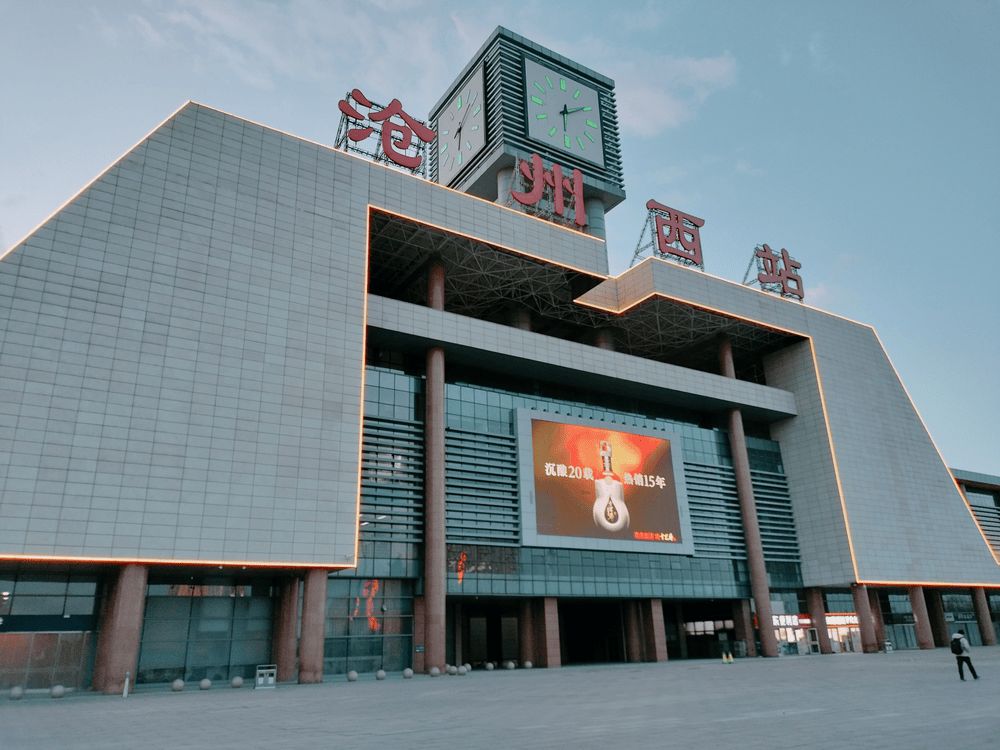
Manufacturing Equipment
The facility’s equipment roster covers the complete sheet metal fabrication value chain — from raw material to finished enclosure — without relying on any external processing subcontractors.
Sheet Metal Fabrication
| Equipment | Quantity | Capability |
|---|---|---|
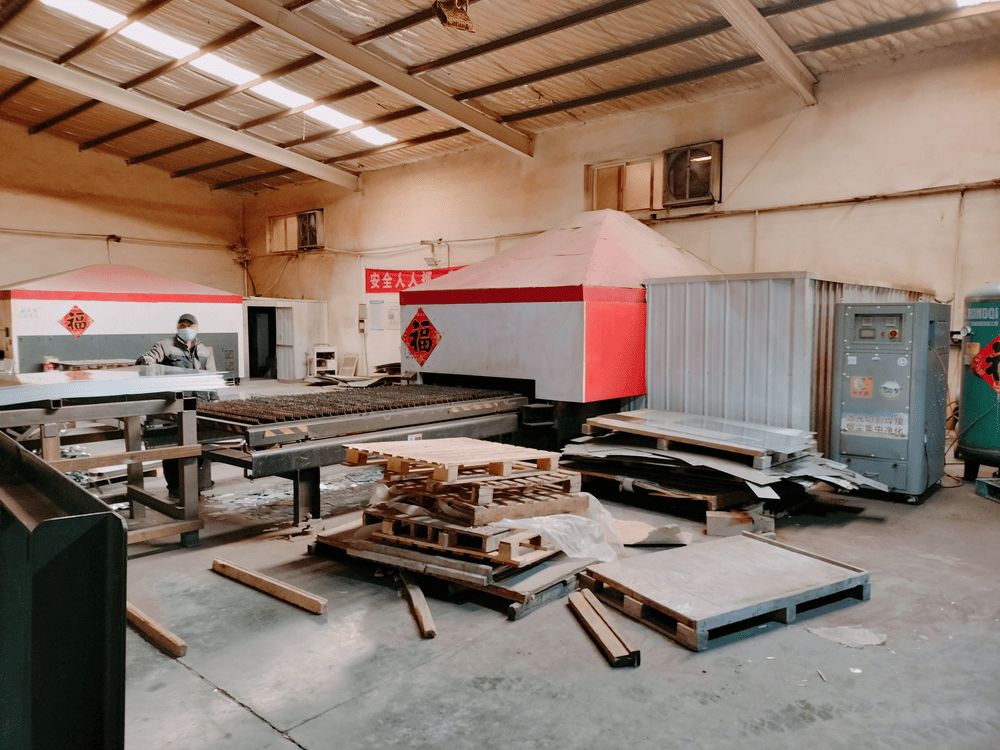
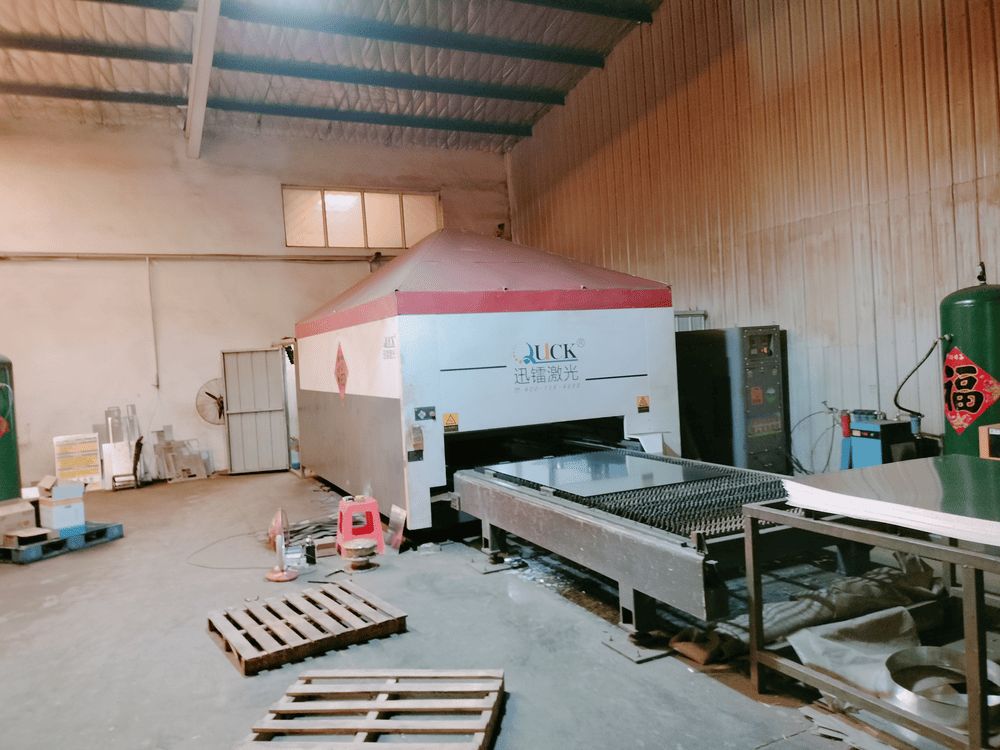
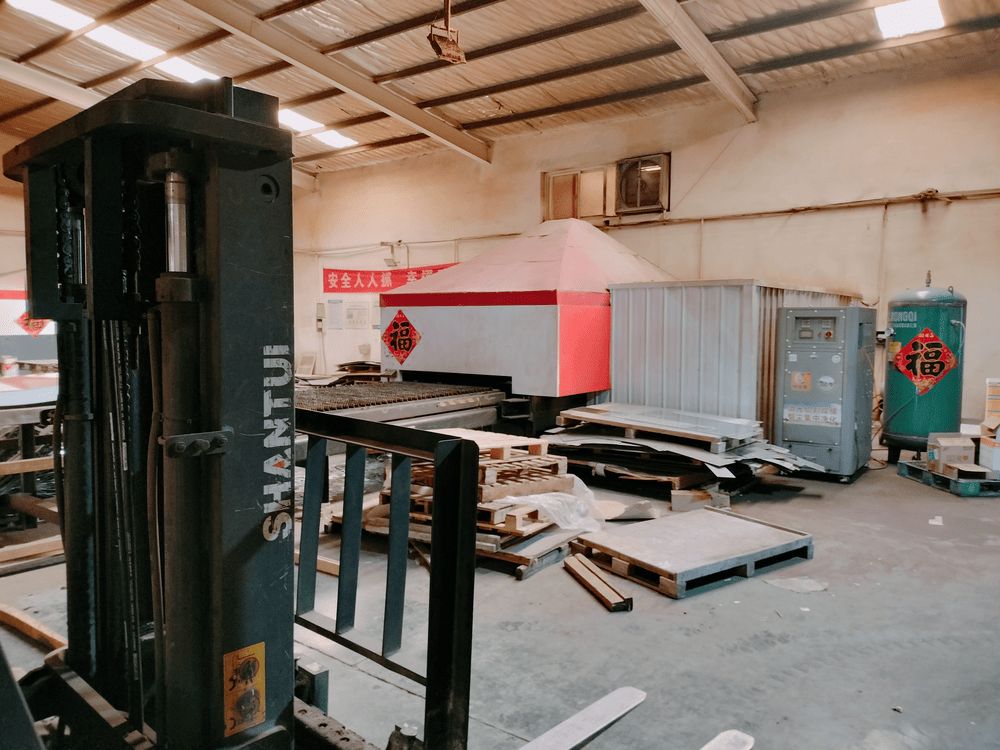
| Fiber laser cutting machines | 3 units | High-power CNC fiber lasers for precision cutting of galvanized steel, stainless steel, and carbon steel sheet up to 3mm+ thickness |
| CNC hydraulic press brakes | 7–8 units (PR-160163A class) | Programmable digital backgauge with automatic bend sequence positioning — handles enclosures from small internal brackets to full vending machine body panels |
| Robotic bending automation cell | 1 system | Automated loading and unloading for press brake operations — reduces manual handling variance and ensures bend-to-bend consistency across production runs |
| CNC punching machine | 1 unit | High-speed turret punching for louvers, vents, mounting holes, and repeated feature patterns |
| Sheet metal notching and grooving | Multiple stations | Edge notching, V-grooving, and chamfering for precise corner joints and fold lines |
| Grinding and surface preparation | Dedicated zone | Weld seam grinding, surface de-rusting, and pre-coat preparation |
| Electrostatic powder coating line | 1 full line | Electrostatic spray application + curing oven — uniform finish across full chassis and components. Colour options include standard RAL colours plus custom matching |
Assembly and Electronics
| Equipment | Quantity | Capability |
|---|---|---|
| Main assembly lines | Multiple | Vending machine and amusement equipment final assembly — chassis integration, wiring harness routing, display mounting, refrigeration unit installation |
| Electronics sub-assembly line | 1 dedicated line | Control board mounting, sensor wiring, power supply integration |
| Industrial test workstations | Multiple | PC-based diagnostics for control system verification and firmware flashing |
| Touchscreen calibration and test fixtures | Dedicated bench | Display alignment, touch response verification, brightness and viewing angle checks |
| Payment module aging test benches | Dedicated bench | Bill acceptor and QR code scanner extended-run reliability testing |
| Refrigeration performance test stations | Dedicated bench | Cooling capacity verification, thermostat calibration, compressor cycling test |
Quality Assurance
| QA Station | Method | Coverage |
|---|---|---|
| Full-system burn-in test | Every machine powered on and operated under load | All motors, spiral coils, sensors, payment modules, refrigeration, and control logic verified |
| Seal integrity check | Physical inspection of door gaskets and enclosure seams | Prevents dust and moisture ingress |
| Load testing | Weighted coil rack operation | Verifies motor torque and spiral coil performance under full product load |
| Surface finish inspection | Visual inspection under controlled lighting | Checks powder coat uniformity, colour consistency, and absence of defects |
| Final pre-crating inspection | Full walk-around checklist | Model number verification, accessory completeness, crate labelling accuracy |
Manufacturing Process
Each vending machine goes through a defined production sequence — from raw steel sheet to crated, tested product:
1. Laser Cutting
Three high-power fiber laser cutters handle the full range of sheet metal components — from large body panels and doors to small internal brackets and mounting plates. CAD design files are loaded directly into the laser cutter’s control system, ensuring every cut path matches the engineering drawings with sub-millimetre precision. The laser cutting bay processes galvanized steel, stainless steel, and cold-rolled carbon steel sheet.
2. CNC Forming: Punching, Notching, and Bending
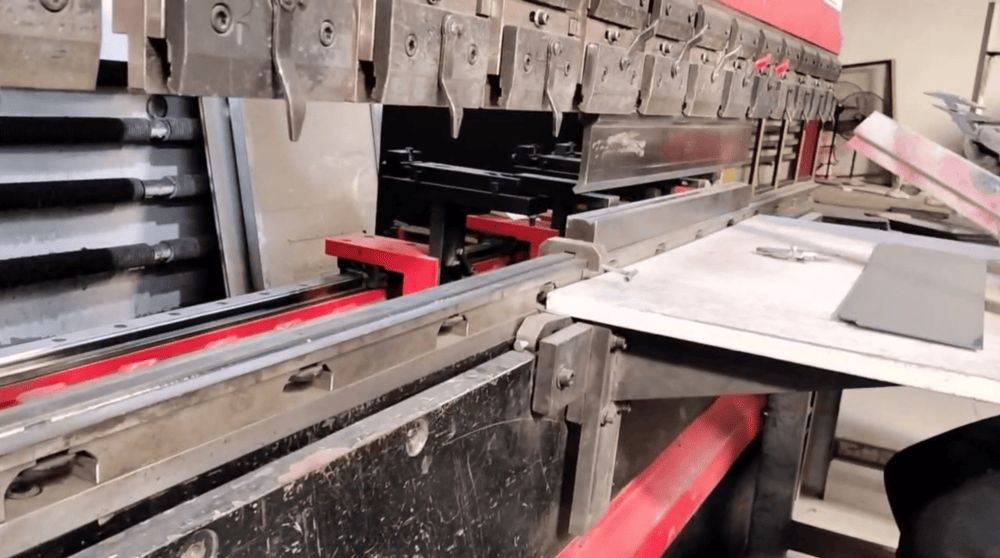
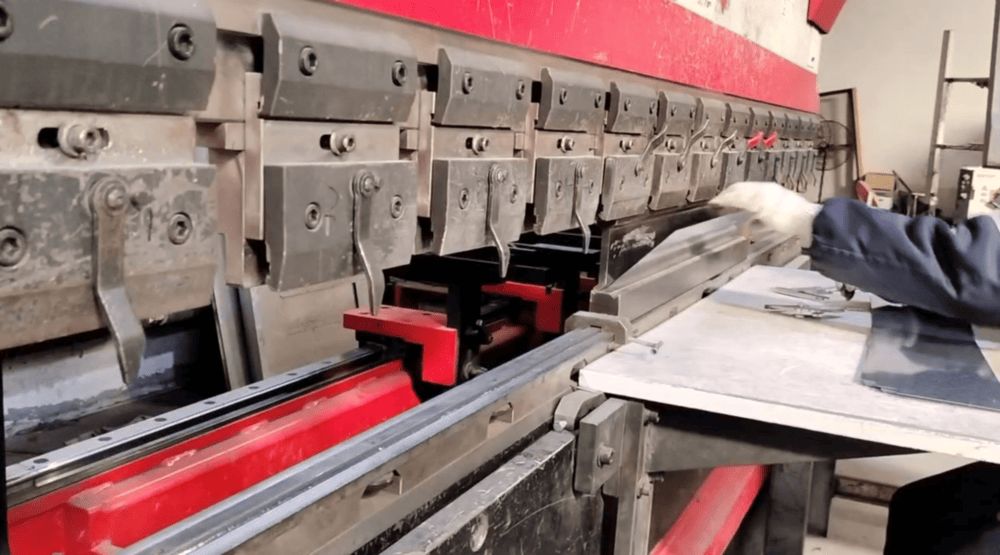
Flat sheet metal parts move through a sequence of forming operations. CNC punching handles repeated features — ventilation louvers, cable entry cutouts, mounting hole patterns — at high speed. Edge notching and V-grooving prepare fold lines for precise corner joints. Parts then reach the CNC press brake station, where 7 to 8 hydraulic press brakes with digital backgauges execute programmed bend sequences. A robotic automation cell handles loading and unloading for high-volume parts, ensuring identical bend geometry across the entire production batch.
3. Welding and Surface Preparation
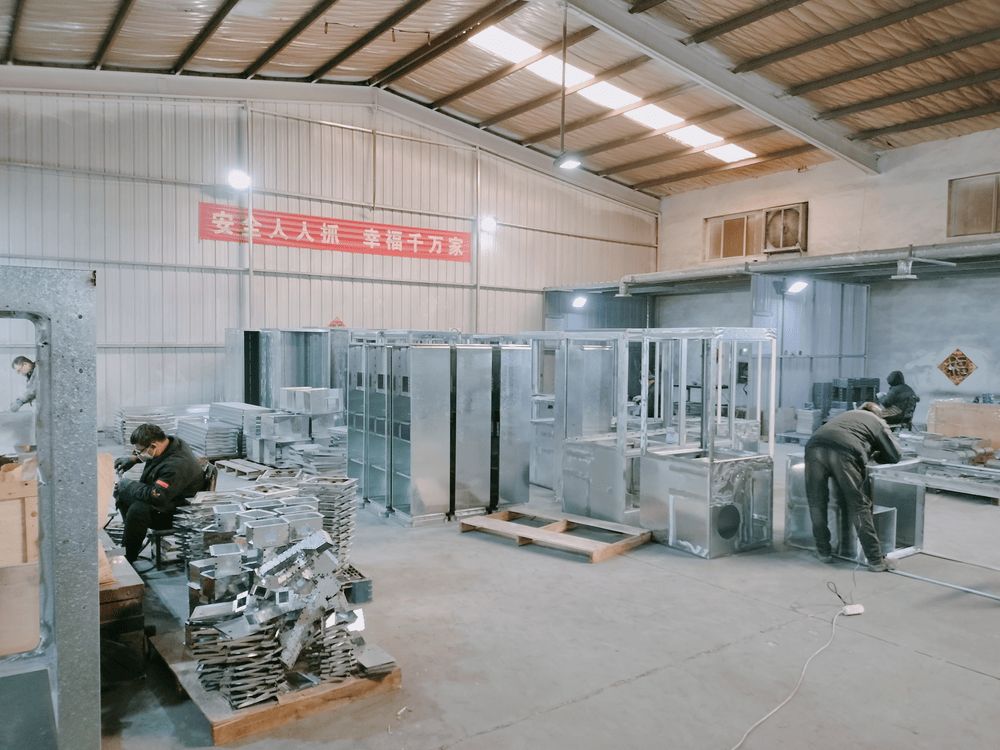
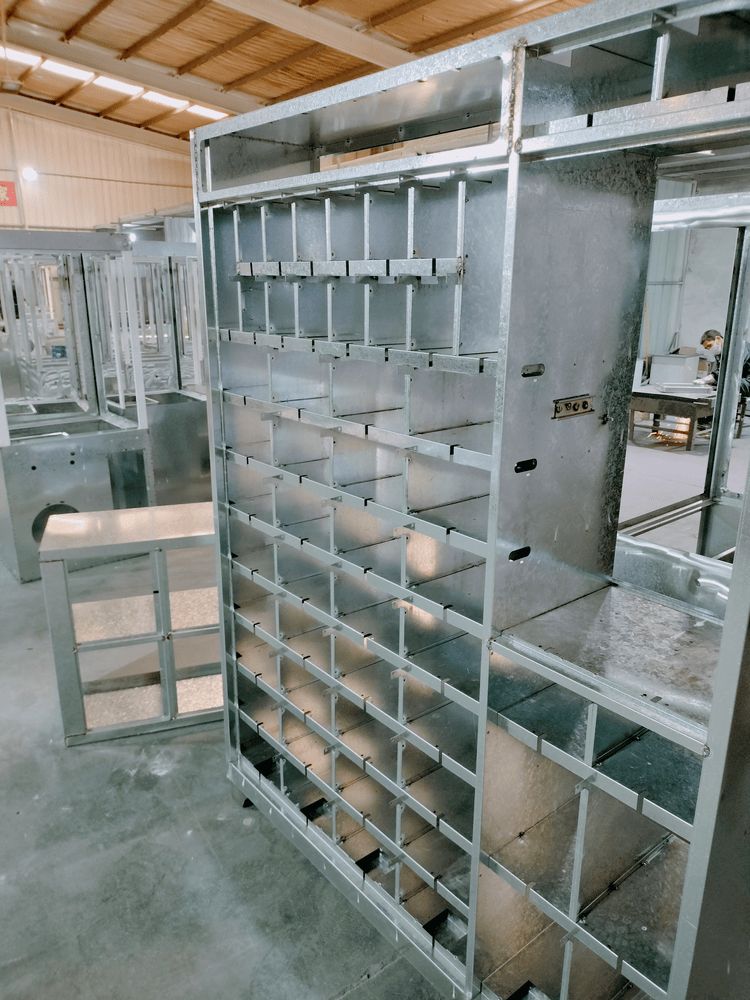
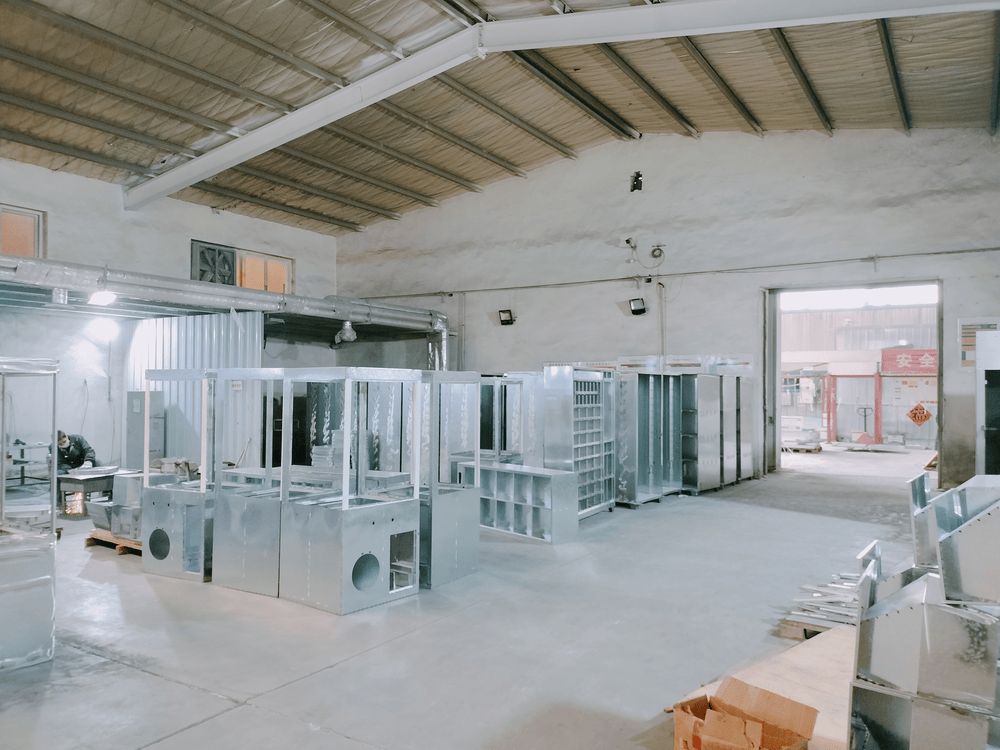
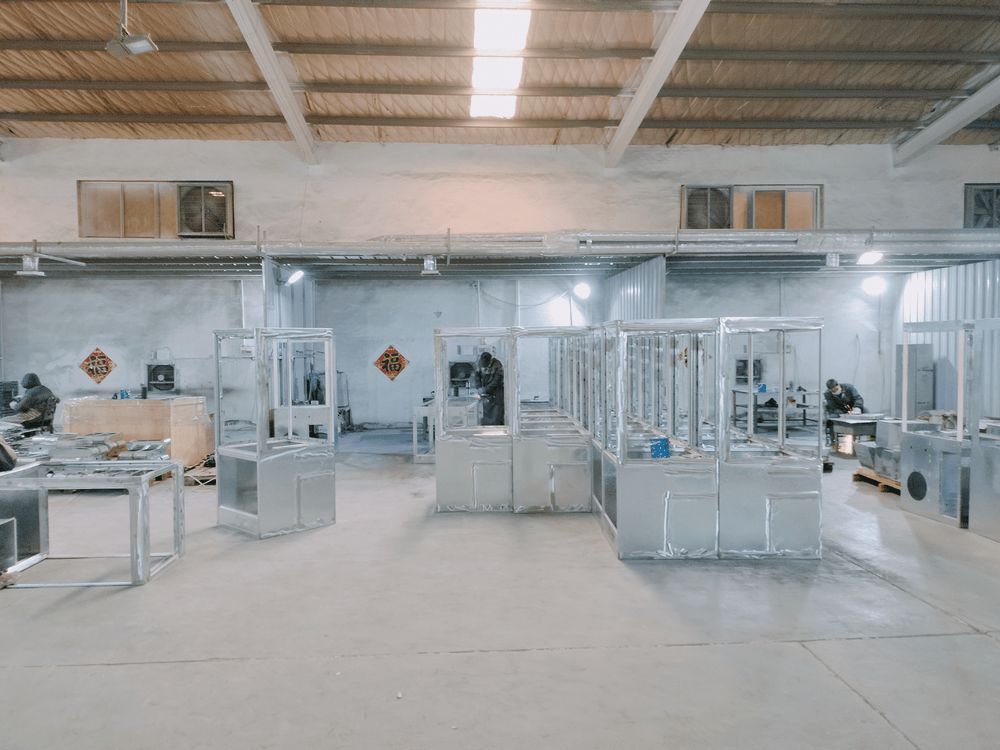
Formed panels are assembled into chassis sub-structures through tack welding (initial positioning) followed by full seam welding on structural joints. After welding, every seam is ground flush and polished to produce smooth, uniform surfaces. Weld seams must be invisible under the final powder coat — this step determines both structural integrity and finished appearance.
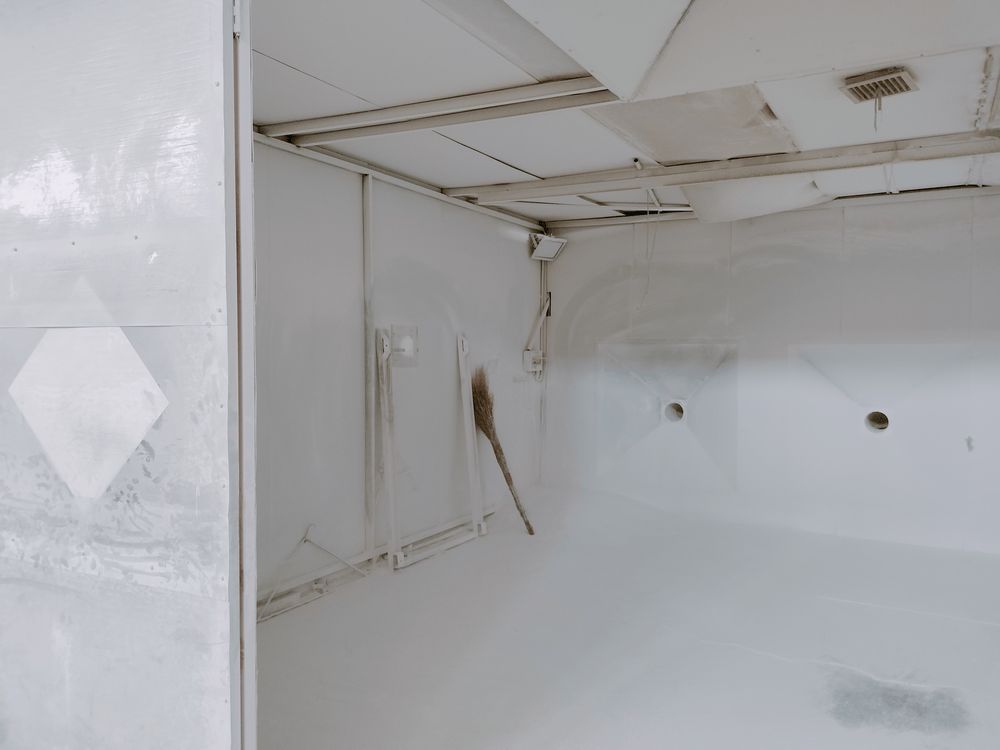
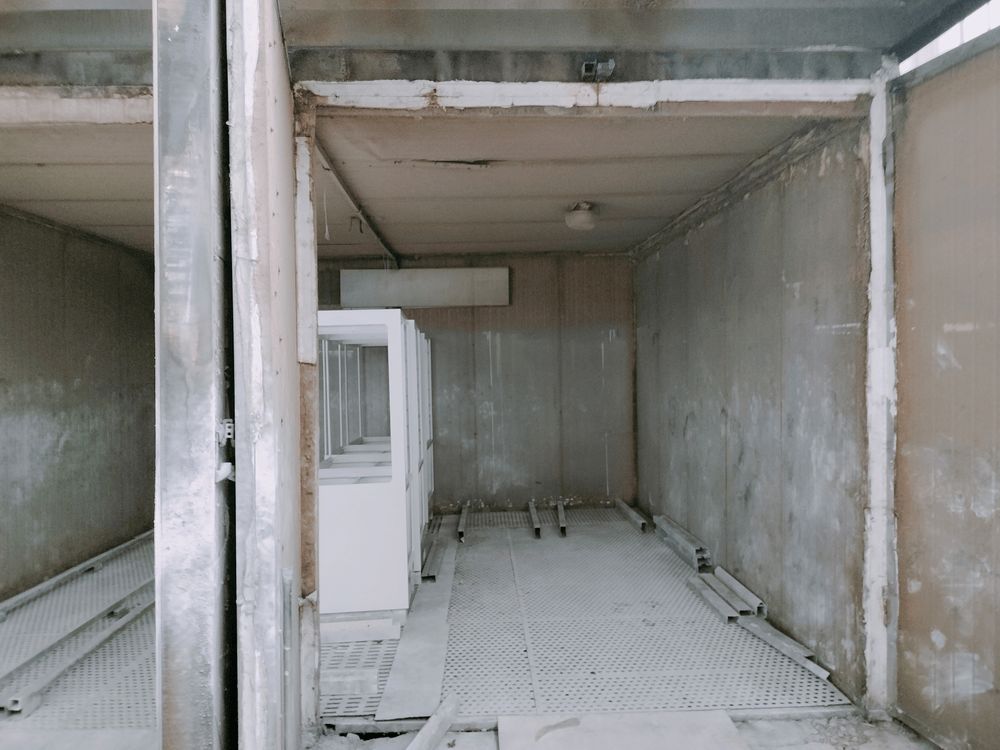
4. Electrostatic Powder Coating
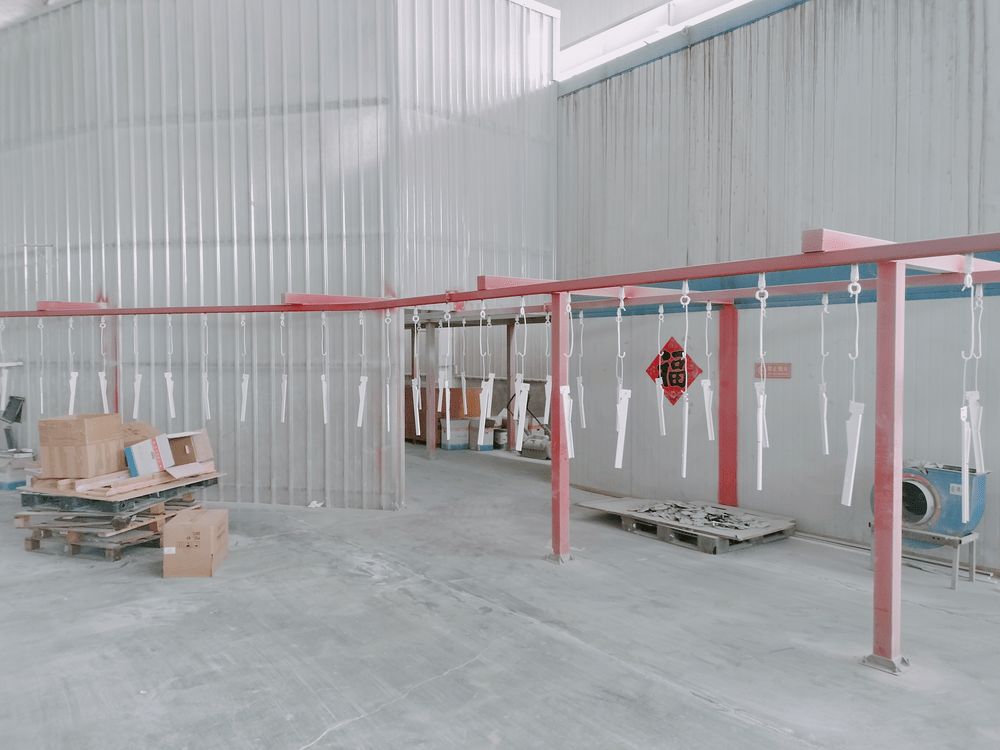
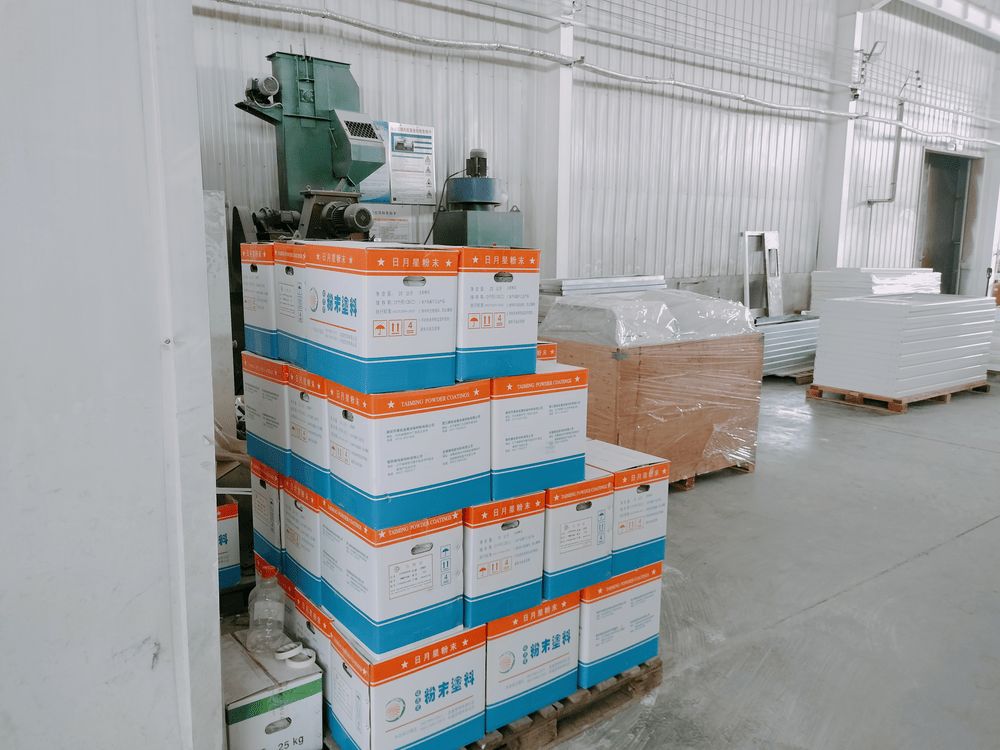
Prepared chassis and components enter the electrostatic powder coating line. The electrostatic application process charges powder particles as they’re sprayed, ensuring they adhere uniformly to grounded metal surfaces — even into recessed corners and inside edges. Parts then pass through a high-temperature curing oven where the powder melts and cross-links into a durable, chip-resistant finish.
The facility maintains separate coating schedules for white and coloured machines to prevent speck contamination in the final finish. Standard colours include white, grey, and black; custom RAL colours are available for branded fleets.
5. Electronics Assembly and System Integration
Powder-coated chassis enter the assembly bay where internal systems are installed in sequence:
- Control system: Main control board, motor driver boards, and power supply units
- Payment hardware: Coin mechanisms, bill acceptors, cashless/QR code readers
- Dispensing mechanism: Motorized spiral coil racks or conveyor belt systems
- User interface: Touchscreen displays, selection keypads, LED indicators
- Climate control: Refrigeration compressors, evaporators, fans, and thermostat controllers (for cooled machines)
- Connectivity: 4G/WiFi modules and antenna routing
The electronics assembly zone operates with ESD-safe workstations for control board handling and connector termination.
6. Testing and Quality Assurance
Every completed machine undergoes full powered-on electrical testing before it leaves the assembly bay. The testing protocol covers:
- Motion systems: Every motor and spiral coil cycled through full rotation under load
- Payment peripherals: Bill acceptors, coin mechanisms, and QR scanners verified with test transactions
- User interface: Touchscreen response, display rendering, keypad input
- Refrigeration: Compressor start-up, cooling ramp, thermostat cycling (for refrigerated models)
- Connectivity: Network registration, server handshake, remote management heartbeat
- Safety: Door interlock switches, emergency stop circuits, earth continuity
Dedicated aging test benches run payment modules and touchscreens through extended reliability cycles. Refrigeration performance is verified on a dedicated test station that measures cooling rate and temperature stability. Every machine is identified by serial number and its test results are recorded.
7. Packaging and Dispatch
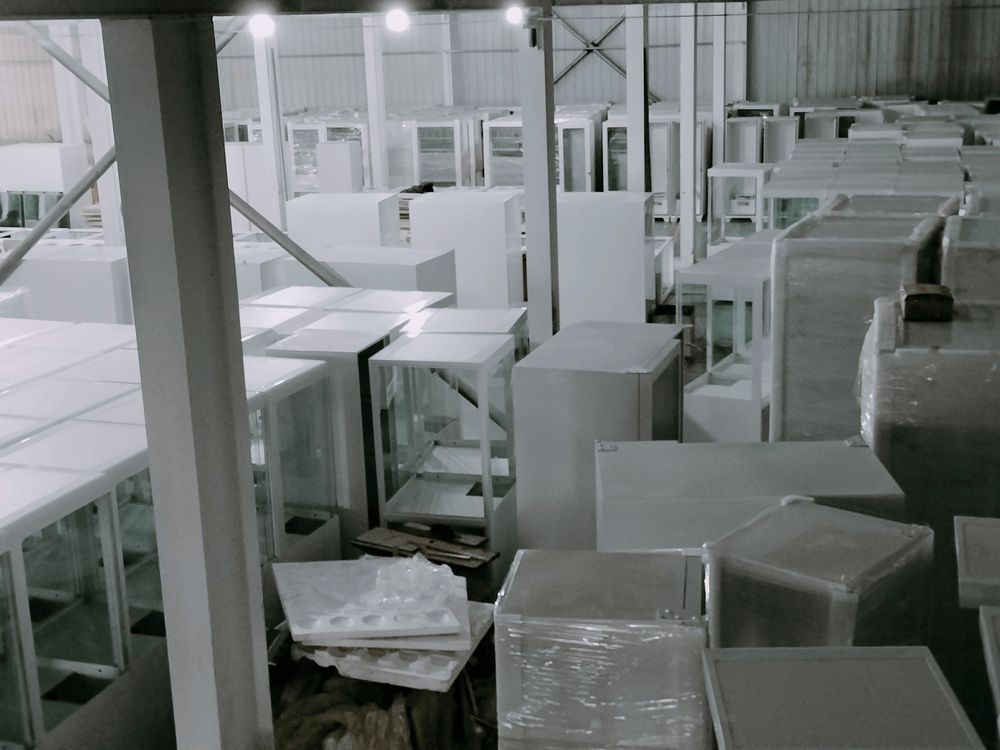
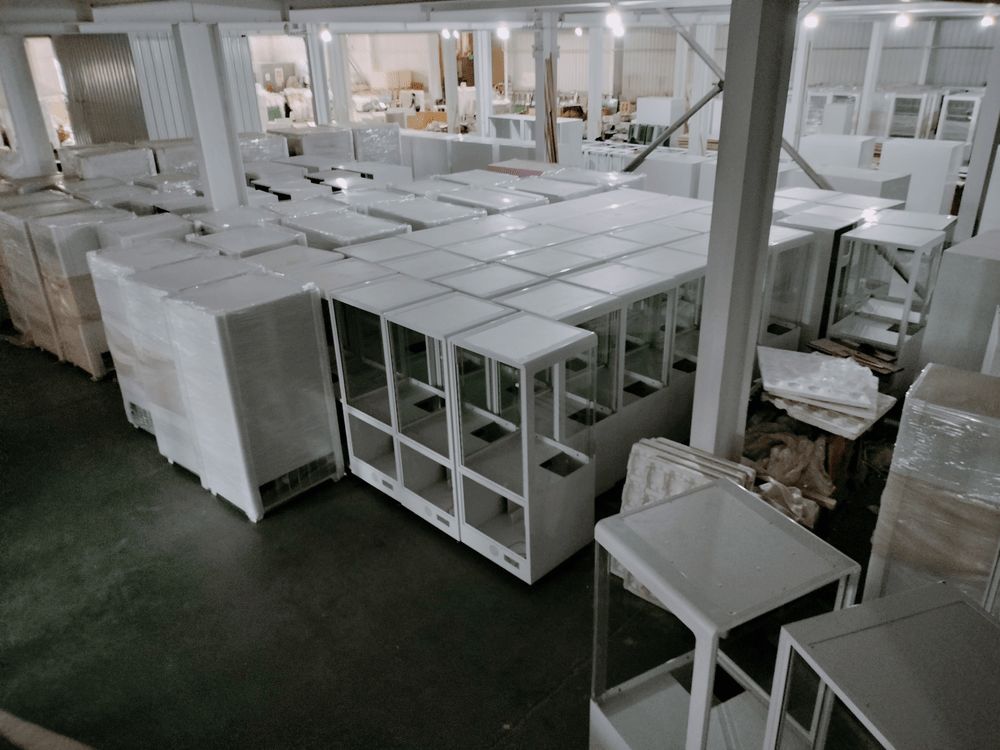
Tested machines are wrapped in protective film, foam-padded at corners and edges, and secured in export-grade wooden crates. Each crate is labelled with model number, serial number, destination, and handling instructions. Packaging is engineered for international ocean freight — machines ship regularly to Australia, New Zealand, Southeast Asia, and the Middle East.
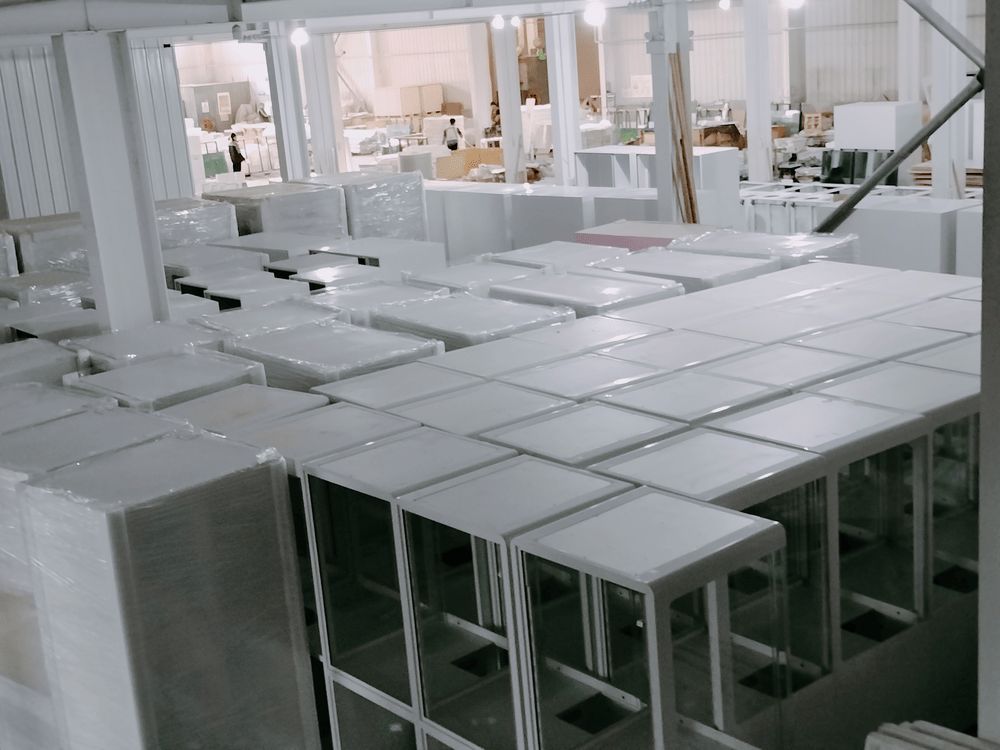
Finished and crated machines are staged in the on-site warehouse, organized by customer order. When the freight forwarder’s truck arrives, crates load directly from the warehouse floor via the facility’s truck dock — no intermediate handling, no off-site warehousing.
Frequently Asked Questions
Where are KioskForce vending machines manufactured?
At several partner manufacturing facilities in China. The largest — the one documented on this page — is a 10,000+ sqm facility in Qing Xian, Cangzhou, Hebei Province, China, approximately 200km south of Beijing and 100km from Tianjin Port, the nearest ocean container port. Which partner builds a given order depends on the equipment the design calls for and the capacity available.
What is the production capacity?
The facility documented here is equipped for 20,000 units annual capacity, with further capacity available across our other partner factories, currently producing 600+ units per month across retail vending, industrial PPE dispensing, and custom kiosk product lines. Equipment includes 3 fiber laser cutters, 7+ CNC press brakes with robotic automation, CNC punching, electrostatic powder coating, and dedicated electronics assembly and testing zones.
What quality control is in place?
Multi-stage QC: dimensional inspection after laser cutting and bending, surface finish inspection after powder coating, and full powered-on electrical testing for every completed machine — all motors, sensors, payment modules, control logic, and refrigeration verified under load. Additional stations cover seal integrity, load testing, payment module burn-in, and a final pre-crating inspection checklist.
How is KioskForce’s manufacturing organised?
KioskForce operates a fab-less manufacturing model. Design, engineering, software development, and quality oversight are managed in-house from the Nanjing office. Production runs across several long-term partner factories in China — the largest being the dedicated 10,000+ sqm facility documented on this page. Working with more than one partner gives KioskForce direct oversight over sheet metal fabrication, automated assembly, electronics integration, and final testing, while keeping capacity, tooling, and lead times independent of any single supplier relationship.
How long does production take?
Typical production lead time is 4–6 weeks from order confirmation to ready-for-shipment, depending on order size and customization complexity. Standard models in common configurations can ship faster; highly customized builds requiring new engineering may extend the timeline.
What shipping options are available?
Machines ship from Tianjin Port via ocean freight (FCL or LCL). Typical transit times: 15–25 days to Australian ports, 20–30 days to Middle Eastern ports, 25–35 days to European ports. Air freight is available for urgent orders but is rarely cost-effective for vending machines given their size and weight.
Get Started
Tell us what you need built, the quantity, and the destination market. We’ll confirm the production lead time and shipping options on the quotation.
Project brief · 60 seconds
What are we building together?
Three quick steps. Your brief goes straight to the engineers who design, build and support KioskForce systems.

