
An outdoor vending machine has the same job as an indoor one: hold stock, take payment, deliver the item and report what happened. The difference is the position. Rain, dust, sun, heat, cold, salt air and unsupervised use all act on the cabinet, and each of them has to be designed for. KioskForce builds outdoor and sheltered vending machines to order. We publish no standard IP or IK rating, because the rating that matters is the one your position needs. It is specified per project and confirmed on the quotation.
Quick answer
- Classify the position first. Covered and open-sided, fully exposed, hosed down, or coastal. The position sets the specification and most of the cost.
- A roof is the cheapest weatherproofing. A shelter or canopy lowers what the cabinet has to withstand. See vending machine shelters.
- Ratings are partial. The IP code (IEC 60529) covers dust and water only. Impact (IK, IEC 62262), temperature range, UV and corrosion are specified separately.
- Refrigeration and screens are where heat bites. Size cooling for the hottest day in direct sun, and specify heaters for cold sites.
- Go cashless. Card, phone and QR payment remove the main reason to break into an unattended machine. See payments.
- Built to order, quoted per project. Our general bands are on vending machine cost; an outdoor build sits above the indoor starting prices.
What an outdoor vending machine is
“Vending machine outdoor” covers anything from a machine in a covered walkway to one bolted to a slab in a car park. Treat these as different products. Classify the position before you look at a single specification:
| Position | What reaches the machine | Typical starting point |
|---|---|---|
| Indoor but unconditioned (loading dock, plant room, unheated foyer) | Dust, temperature swings, condensation | Wide operating temperature range, dust protection |
| Covered, open-sided (canopy, courtside shelter, station platform under a roof) | Blown rain and splashes, dust, reflected heat | Splash and dust protection on electronics, drip edges, shade |
| Fully exposed (street, car park, beach path, campus) | Driving rain, full sun, dust, impact | Jet protection on exposed parts, UV-stable finish, IK-rated glazing, sun management |
| Hosed or wash-down (food courts, some transport hubs) | Water jets during cleaning | Jet protection on everything that gets hosed |
| Coastal or industrial atmosphere | Salt spray, corrosive dust | All of the above, plus corrosion-resistant materials and coatings |
These are planning starting points, not requirements of any standard. Write down which row you are in when you enquire, and send a photo.
North American certification draws the same line. The scope of UL 751, the safety standard for vending machines, states that machines are intended for indoor use only, except that they will be investigated for outdoor use or use in a protected location if the manufacturer designates them for it. Its revised requirements took effect on 12 June 2026. A refrigerated section is evaluated to UL 541. So “outdoor” is a designation the machine is built and tested for, not a property any machine has by default. Our UL 751 guide covers the detail.
What weather does to a vending machine
An indoor machine moved outside usually fails in one of seven ways. Each one has its own fix:
| Failure | What happens | What to specify |
|---|---|---|
| Water ingress | Controller, power supply, card reader or screen gets wet | Sealed electronics compartment, protected reader and screen, drip edges, cable entry from below |
| Dust | Fans and condenser clog; dust reaches boards | Filtered or sealed cooling; dust protection on electronics |
| Sun and heat | Cabinet runs far above air temperature; refrigeration can’t keep up; screen washes out | Shade, light finish, cooling sized for direct sun, a screen bright enough for the position |
| Cold | Screens respond slowly, mechanisms stiffen, condensation forms on warm-up | Thermostatic heaters, wide-range components |
| Condensation | Glass fogs; moisture forms inside on cold nights | Heated or insulated glazing, small enclosure heaters or breather vents |
| Impact and forced entry | Broken glass, pried doors, attacked reader | IK-rated glazing, hidden fixings, robust locks, no cash |
| Corrosion | Rust at seams, fixings and hinges | Coating system and fixings chosen for the atmosphere |
The weather numbers are larger than people expect. ETSI EN 300 019-1-4, which classifies conditions for equipment at non-weatherprotected locations, designs every one of its outdoor classes for solar radiation of 1,120 W/m². That is on top of the air temperature:
| ETSI class (non-weatherprotected) | Air temperature range | Solar radiation |
|---|---|---|
| 4.1 | −33 °C to +40 °C | 1,120 W/m² |
| 4.1E (extended) | −45 °C to +45 °C | 1,120 W/m² |
| 4.2L (extremely cold) | −65 °C to +35 °C | 1,120 W/m² |
| 4.2H (extremely warm, dry) | −20 °C to +55 °C | 1,120 W/m² |
The same standard notes that on a cloudless night an exposed surface can fall 10 to 20 °C below the air temperature. That is why glass fronts fog and electronics compartments collect moisture. A vending machine in the same position faces the same sun and sky as a street telecom cabinet.
The ratings that describe an outdoor machine
IP code: dust and water (IEC 60529)
The first digit rates solids and dust: 5 is dust-protected, 6 is dust-tight. The second rates water: 4 is splashing from any direction, 5 is water jets (6.3 mm nozzle, 12.5 L/min), 6 is powerful jets (12.5 mm nozzle, 100 L/min) and 7 is temporary immersion. Three things catch buyers out:
- X means “not tested”, not “not needed”.
- Ratings above 6 are not cumulative. An IPX7 part has not necessarily passed the jet tests. A vending machine needs jet resistance, never immersion.
- The rating covers the enclosure as tested. A machine is not one sealed box. It has doors, a delivery port, a reader and ventilation for its refrigeration. Ask which parts the rating covers and ask for the test report.
The IP code says nothing about UV, corrosion or condensation. Those are separate lines in the specification. Full detail is on the IP and IK ratings page.
IK code: impact (IEC 62262)
IK codes run from IK01 (0.14 J) to IK10 (20 J), with IK11 (50 J) added in 2021. Specify it for the glazing and screen, not just the steel, and ask which part the rating applies to. Our vandal-resistant vending guide covers locks, glazing and fixings.
Temperature range and certification
State the coldest and hottest expected temperatures, whether the machine will stand in direct sun, and the certification your market or landlord requires. KioskForce builds to the certification requirement you state. We do not certify a site’s compliance.
This is a summary for planning, not legal advice. Rules change; confirm with the certifier and the authority where the machine will stand (as of October 2026).
Shelter first
The cheapest weatherproofing is a roof. A canopy or open-sided shelter removes most of the rain and direct sun, which lowers the ingress rating, screen brightness and cooling capacity the machine needs. It also keeps buyers dry while they pay, which helps sales on a wet day.
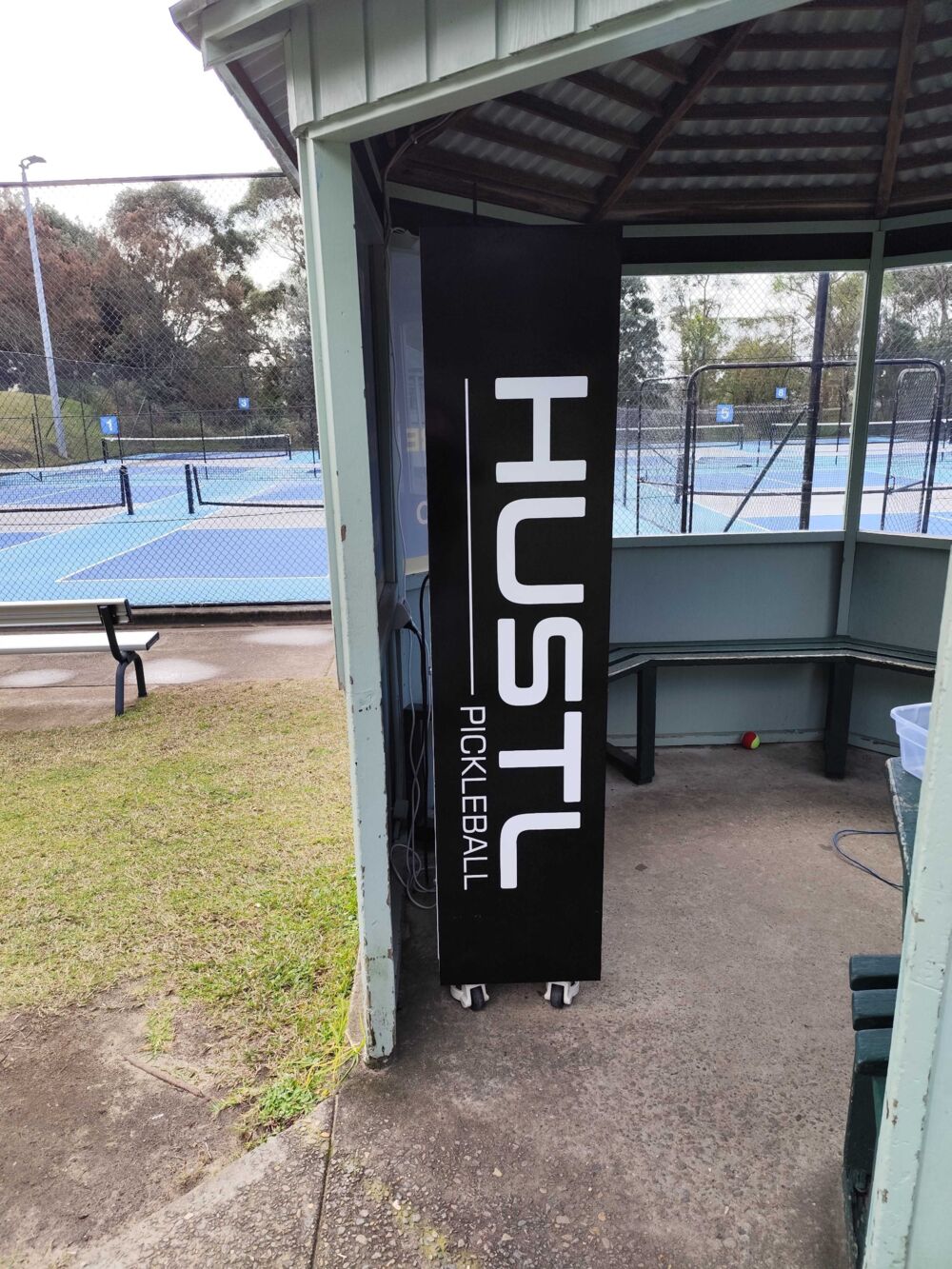
Our equipment-hire lockers are the working example. They use polycarbonate doors and weather-resistant construction, and the unit pictured runs year-round in an open-sided shelter. See equipment hire and outdoor smart lockers.
A shelter still has to work for the people using it. In the US, the 2010 ADA Standards require at least one of each type of vending machine provided to have operable parts that comply with section 309, including reach ranges of 15 to 48 inches. They also require 80 inches of vertical clearance on circulation paths. A low canopy edge or a shelter post in the clear floor space defeats both. The vending machine shelter page covers types, sizing and permits.
What we configure for an outdoor position
Cabinet and enclosure
Our touchscreen platforms are the starting point: the BG10X10 (1,110 mm wide, 820 mm deep, 1,975 mm high) and the KF10X22 (1,310 × 820 × 1,975 mm), each available ambient or refrigerated. For an outdoor or sheltered position, the cabinet, seals, finish and fixings are specified for the exposure you describe. Our purpose-built public-health dispensers use 1.2–1.5 mm steel, powder-coated and weather-proofed for semi-outdoor positions, with tamper-resistant locks and a shatter-proof screen. Hardware and software are designed in-house, and machines are built in our partner factories in China.
Refrigeration, heating and the combo question
Outdoors, refrigeration has to remove the heat of the sun as well as the heat of the air. Give us the hottest expected day and whether the cabinet will stand in direct sun, so the cooling is sized for the real load. Keep the condenser’s air path clear and shaded. Cold sites need the opposite: heaters that keep the screen, payment device and mechanisms inside their operating range.
Refrigerant is fixed on the quotation for the destination market: R290 or R134a. Our refrigerated machines have a health-control block that stops sales when the cabinet goes out of temperature range, with the threshold set to your food-safety rules. Snack-and-drink combinations outdoors are covered on the outdoor weatherproof combo vending machine page.
Screen and glazing
A screen in daylight has to be bright enough to read and is itself a heat source in a hot cabinet. Brightness, optical bonding and anti-reflective treatment are specified per project, as on our outdoor kiosks guide. Glass fronts fog when warm, humid air meets cold glass. The glass-front page covers glazing choices, condensation and security.
Payment
Cashless by default for an unattended outdoor position. You can fit an MDB cashless terminal such as Vending on Track VendCoin, Nayax or Cantaloupe, or use on-screen QR payment, which needs no reader at all. The payment terminal faces the weather directly, so its own rating and mounting matter as much as the cabinet’s. The machine writes its own order record on every payment, so the sales report shows which product sold, not only the amount. See payments.
Telemetry and remote control
Every KioskForce machine reports sales, stock, temperature readings and door events to the cloud dashboard over 4G or Wi-Fi. Outdoors that means you see a cabinet running warm or a door opened out of hours without a site visit. Prices and payment methods can be changed remotely with VoTi remote configuration. A 4G telemetry plan typically costs USD 5–10 per month per machine.
Power, connectivity and fixing
Bring a dedicated circuit with residual-current protection, fitted by a licensed electrician. Site Wi-Fi rarely reaches an outdoor position reliably, so most outdoor machines use 4G with the antenna placed where the steel cabinet does not shield it. Anchor the machine to a slab with fixings reached only from inside. Our castors are for short indoor repositioning, not outdoor positions. Solar is a build-time specification, not a retrofit. The power and connectivity page covers the detail.
What sells outdoors
| Position | Typical range | Watch for |
|---|---|---|
| Beaches, parks and pools | Cold drinks, sunscreen, hats, swim goods | Heat on the stock; sunscreen storage limits. See sunscreen vending machines |
| Golf courses and ranges | Balls, tees, gloves, drinks | Range-ball dispensers are a different machine. See golf ball vending machines |
| Marinas, piers and bait shops | Chilled bait, tackle, ice, drinks | Chilled bait needs refrigeration and sealed packaging. See bait vending machines |
| Self-serve car washes | Towels, air fresheners, detailing supplies | Spray and grit. See car wash vending machines |
| Sports courts and fields | Equipment hire, drinks, grips and balls | Return of hired kit; see equipment hire |
| Car parks, campuses and transport stops | Drinks, snacks, chargers, essentials | Impact, loitering, sun on the screen |
Contents have temperature limits too. A can of soft drink tolerates more than chocolate, sunscreen, batteries or medicines. If the stock has a label storage condition, the cabinet has to hold it on the hottest day.
Price and lead time
We quote each outdoor build. What moves the price: the ingress and impact ratings, the glazing, refrigeration sized for direct sun, heaters for cold sites, screen brightness, corrosion protection, payment hardware, branding and quantity. For orientation, our published starting prices for indoor platforms are from USD 1,200 for the BG10X10 and from USD 2,100 for the KF10X22. An outdoor build sits above those. See vending machine cost. The shelter, slab, power run, freight and duty sit on top.
Our general lead times are 4–6 weeks for a modified standard model and 8–12 weeks for a custom build. Outdoor-specific testing is scoped with the project, and the lead time for your configuration is stated on the quotation.
Where an outdoor vending machine is the wrong answer
- An indoor or covered position is available. A lobby, foyer or doorway avoids most of this page and costs less to buy and run. Look hard at one first.
- Nobody will look after it. An outdoor machine needs filters cleaned, glass wiped, seals checked and graffiti removed. If no one owns that, it degrades fast.
- The stock cannot take the heat and the position has no shade or temperature control.
- The site is isolated, dark and unsupervised, with a history of attacks. Even a hardened cabinet will be attacked; move it inside the secure line.
- There is no power and no signal. A machine that cannot report cannot tell you it has stopped selling. Plan power and 4G before the machine.
- Your project needs US-made or Buy America content. KioskForce manufactures in China.
What to send with an enquiry
- A photo of the position and which way it faces.
- Exposure: covered or open, hosed or not, coastal or industrial atmosphere.
- Climate: the coldest and hottest expected temperatures.
- The products, with packaging dimensions and any storage temperature limits.
- Ratings and certification your market, landlord or tender requires.
- Payment method, and the make and model of any terminal you already use.
- Power and network at the spot: where the supply is and how good the 4G signal is.
- Number of machines, destination country and timeline.
Questions to ask any supplier
- Is this machine designated and tested for outdoor use, or an indoor machine with a roof over it?
- What IP code does the machine carry, for which parts, and can I see the test report?
- What is the IK rating of the glass and screen?
- What ambient temperature range was the refrigeration sized for, and in direct sun?
- How does the machine heat itself on a cold night, and how does the glass stay clear?
- What coating and fixings are used for a coastal site?
- What does the payment terminal’s own rating cover?
- What reaches the dashboard: temperature, door events, offline alerts?
- Who installs it, and who handles warranty and spare parts in my country?
How KioskForce answers each point
| Point | Our answer |
|---|---|
| Outdoor builds | Yes, built to order for sheltered and outdoor positions |
| Published IP or IK rating | None. Ratings are specified per project and confirmed on the quotation |
| Proof in use | Equipment-hire lockers with polycarbonate doors running year-round in an open-sided shelter beside outdoor courts |
| Refrigeration | Ambient or refrigerated, R290 or R134a by market; health-control block stops sales out of range |
| Payment | MDB cashless (VendCoin, Nayax, Cantaloupe and others) or on-screen QR; cash possible, not recommended outdoors |
| Telemetry | Sales, stock, temperature and door events over 4G or Wi-Fi; remote pricing |
| Certification | Built to the requirement you state for the destination market; we do not certify site compliance |
| Installation and support | Installation optional, by your contractor or, in some regions, a local distributor; support by email; where a distributor supplied the machine, it handles warranty and service |
| Price and lead time | Quoted per build; 4–6 weeks modified standard, 8–12 weeks custom |
| Manufacturing | Hardware and software designed in-house, built in partner factories in China |
Every page in this cluster
- Car Wash Vending Machine: Towels, Air Fresheners and Detailing Supplies — A car wash vending machine sells towels, air fresheners and detailing supplies at self-serve washes. What sells, spray and heat, payment, security and cost.
- Golf Ball Vending Machine: Range Dispensers vs Retail Ball and Tee Vending — A golf ball vending machine is either a range-ball dispenser or a retail machine for packaged balls, tees and gloves. How each works, what to specify, costs.
- Live Bait and Tackle Vending Machines: A Bait Vending Machine Guide — Bait vending machine guide: chilled worms, frozen bait and tackle for marinas, piers and bait shops, why live fish need a different machine, rules and costs.
- Outdoor Vending Machine Heat and Cold: Refrigeration, Heaters, Screens — Outdoor vending machine heat and cold: sun load on refrigeration, heaters for frost, screens in sun, condensation, and the climate range to put in a specification.
- Outdoor Vending Machine Placement: Permits, Landlords, Insurance and Theft — Outdoor vending machine placement: which permits apply, real zoning rules, landlord agreements, insurance, theft and the weather and power checks for a spot.
- Outdoor Vending Machine Power and Connectivity: GFCI, RCD, 4G and Solar — Outdoor vending machine power explained: NEC 422.5 GFCI and AS/NZS 3000 RCD rules, circuits and surge, 4G versus Wi-Fi, and when a solar vending machine works.
- Outdoor Vending Machine with Glass Doors for Sale: What to Check — Buying an outdoor vending machine with glass doors? Check the glazing, condensation control, sun load, impact rating and energy use before you buy. Here is how.
- Outdoor Weatherproof Combo Vending Machine: What to Specify — What an outdoor weatherproof combo vending machine really needs: IP and IK ratings, sun and cold, glass or solid front, and snacks and drinks in one cabinet.
- Sunscreen Vending Machine Guide: Heat, Free Dispensers and Paid Sales — Sunscreen vending machine guide: keeping stock below label temperatures, free pump dispensers vs paid or free-vend machines, formats, placement and spec.
- Vending Machine IP Rating: IP and IK Ratings for Outdoor Machines — Vending machine IP rating explained: what IEC 60529 IP codes, IEC 62262 IK codes and NEMA 250 types mean, when an IP65 vending machine is needed, and what to ask.
- Vending Machine Shelter and Awning Guide: Types, Sizing, Permits — A vending machine shelter cuts the rain and sun an outdoor machine must survive. Shelter types, sizing arithmetic, airflow, accessibility and permits explained.
Frequently asked questions
Can a normal vending machine be used outdoors?
Not in direct weather. An indoor machine has no sealed electronics compartment, its card reader and screen are not built for rain or sun, its refrigeration is sized for a room, and its power connection is not rated for a wet location. In North America, UL 751 treats vending machines as indoor equipment unless the manufacturer designates them for outdoor or protected-location use, in which case they are investigated for that use. Under a deep canopy or in an open-sided shelter, a machine built for a sheltered position can work, but that is a decision made when the machine is specified, not a retrofit.
Does KioskForce make outdoor vending machines?
Yes, built to order. KioskForce designs vending machines, kiosks and smart lockers for sheltered and outdoor positions. Our equipment-hire lockers use polycarbonate doors and weather-resistant construction, and one courtside unit runs year-round in an open-sided shelter beside outdoor courts. We do not publish a standard IP or IK rating for any outdoor build. The ingress rating, impact rating, temperature range and certification are specified per project and confirmed on the quotation. We sell direct and, in some regions, through local distributors.
What IP rating does an outdoor vending machine need?
It depends on how exposed the position is. Under IEC 60529 the first digit rates dust and the second rates water: 4 is splashing from any direction, 5 is water jets from a 6.3 mm nozzle and 6 is powerful jets from a 12.5 mm nozzle. A sheltered machine is usually specified against splashing water and dust, and a fully exposed or hosed one against jets. Ask which parts the rating covers, because a rated screen is not a rated machine, and ask for the test report.
Is a waterproof vending machine the same as a weatherproof one?
No. Waterproof is not a defined term for vending machines. A machine has doors, a delivery port, a card reader and ventilation for its refrigeration, so it is never sealed like a submersible device, and it does not need to be. What an outdoor machine needs is protection from rain and jets on the parts that fail when wet, plus protection from sun, heat, cold, condensation, impact and corrosion, which the IP code does not cover. Weatherproof describes that whole package and has to be spelled out rating by rating.
Do outdoor vending machines need a shelter?
Not always, but a roof is usually the cheapest weatherproofing available. A canopy or open-sided shelter takes most of the rain and direct sun off the cabinet, which lowers the ingress rating, screen brightness and cooling capacity the machine needs, and keeps buyers dry while they pay. A shelter must still leave room to open the service door, keep an accessible approach to the controls, and be designed for wind and snow loads where you are. Building rules for the shelter are local.
How do you power an outdoor vending machine safely?
From a dedicated circuit with residual-current protection, installed by a licensed electrician to local rules. In the United States, NEC 210.8(B) requires GFCI protection for outdoor receptacles at non-dwelling sites, and NEC 406.9 requires 15 and 20 amp wet-location receptacles to be weatherproof whether or not a plug is inserted. Size the circuit for the compressor start-up surge on a refrigerated machine, and bring the cable in from below. Solar power is a build-time specification, not an add-on.
Should an outdoor vending machine take cash?
Usually not. A cash box gives someone a reason to attack the machine and gives you a collection round to secure. Contactless cards and phone wallets through an MDB cashless terminal, or on-screen QR payment, keep the cabinet empty of money. KioskForce machines can take coin and note acceptors where a market still needs cash, but on an unattended outdoor position we recommend cashless and say so at quotation.
How much does an outdoor vending machine cost?
KioskForce quotes each outdoor build, because the outdoor specification is what moves the price: the ingress rating, impact-resistant glazing, refrigeration sized for heat, heaters for cold sites, a brighter screen, corrosion protection and anchoring. For orientation, our published starting prices for indoor platforms are from USD 1,200 for the BG10X10 and from USD 2,100 for the KF10X22, both available ambient or refrigerated. An outdoor build costs more than those starting prices. A shelter, groundworks, power, freight and duty sit on top.
Who installs and services an outdoor vending machine?
KioskForce does not install or service machines on site. On-site installation is optional and is done by your own contractor or, in some regions, provided through a local distributor. We supply drawings and installation guidance. Support is by email, and spare parts are shipped from us or through the local distributor that supplied the machine. Where a local distributor supplied the machine, that distributor handles warranty and service. An outdoor machine needs routine care such as cleaning filters and glass, so plan who owns that before you buy.
References
- Wikipedia — “IP code” (summary of IEC 60529 test conditions; accessed 3 October 2026). https://en.wikipedia.org/wiki/IP_code
- Wikipedia — “EN 62262” (IK code impact energies; IK11 added 2021; accessed 3 October 2026). https://en.wikipedia.org/wiki/EN_62262
- ETSI — “EN 300 019-1-4 V2.1.1: Classification of environmental conditions; Stationary use at non-weatherprotected locations” (November 2002). https://www.etsi.org/deliver/etsi_en/300001_300099/3000190104/02.01.01_40/en_3000190104v020101o.pdf
- Intertek — “Standards Update Notice: UL 751, Vending Machines (revised 18 December 2024)” (effective date 12 June 2026; accessed 3 October 2026). https://w3inte.intertek.com/siteassets/resources/sun/2025/ul-751-cc-sun-rev-12-18-2024-ed-6-12-2026.pdf
- U.S. Access Board — “2010 ADA Standards for Accessible Design” (sections 228.1, 307.4, 308; accessed 3 October 2026). https://www.access-board.gov/ada/
- Electrical License Renewal — “210.8(B) GFCI Protection, Other Than Dwelling Units” (NEC text, item (4) Outdoors; accessed 3 October 2026). https://www.electricallicenserenewal.com/Electrical-Continuing-Education-Courses/NEC-Content.php?sectionID=1425
- UpCodes — “406.9 Receptacles in Damp or Wet Locations”, NFPA 70 2023 (accessed 3 October 2026). https://up.codes/s/receptacles-in-damp-or-wet-locations
Related
- Outdoor kiosks — IP vs NEMA, sunlight-readable screens and thermal management for self-service terminals.
- Outdoor smart lockers — the same exposure questions for locker banks.
- Vandal-resistant vending machines — cabinets, glazing, locks and cages.
- Refrigerated vending machines — cold holding, refrigerants and the health-control block.
- Payments — terminal compatibility and item-level card sales data.
- Power and compliance — supply voltage, circuits and certification marks by market.
- Equipment hire — the courtside lockers running in an open-sided shelter.
Talk to us about an outdoor vending machine
Send a photo of the position, which way it faces, whether it is covered, what the machine will sell and the ratings you need. We will come back with a cabinet specification, the ratings we will build to and a price.
Project brief · 60 seconds
What are we building together?
Three quick steps. Your brief goes straight to the engineers who design, build and support KioskForce systems.

