
An outdoor smart locker is a smart locker built for one particular position, and the position decides the specification. A cabinet in an open-sided shelter faces very different conditions from one standing in a car park facing west. The questions to answer are the same for both: how much water and dust reach it (an IP rating under IEC 60529), how much sun and heat, how hard someone might hit or lever it (an IK rating), and how it gets power and a network connection. This page works through each one.
Quick answer
- Shelter first. A canopy or open-sided shelter removes most of the rain and sun load. It is usually cheaper than building the cabinet for full exposure.
- IP rating (IEC 60529): first digit for dust (5 dust-protected, 6 dust-tight), second for water (4 splashing, 5 jets, 6 powerful jets). Sheltered positions typically need around IP54. Exposed or hosed positions typically need IP55 to IP65.
- IP does not cover sun, heat, impact or corrosion. Specify a temperature range, a UV-stable finish, an IK impact rating (IEC 62262), and corrosion protection for coastal sites.
- Power: a dedicated outdoor circuit with residual-current (GFCI or RCD) protection, fitted by a local electrician.
- Network: usually 4G. Know what the locker does when the signal drops.
- Decide at order. The outdoor rating, chilled or heated cells, charging and weight sensors are all built in, not added later.
What counts as “outdoor”?
“Outdoor” covers anything from a covered walkway to an exposed pole in a car park. Classify the position before choosing a rating:
| Position | What reaches the locker | Typical starting specification |
|---|---|---|
| Indoor, unconditioned (loading dock, plant room) | Dust, temperature swings, condensation | Dust protection, wide temperature range |
| Covered, open-sided (canopy, courtside shelter, building undercroft) | Blown rain, splashes, dust, reflected heat | Around IP54 for electronics. Drip edges over doors |
| Exposed (street, car park, campus path) | Driving rain, full sun, dust, impact | Around IP55–IP65, UV-stable finish, IK rating, sun shading |
| Hosed or wash-down (food sites, some transport hubs) | Water jets during cleaning | IPX5 or IPX6 on the parts that get hosed |
| Coastal or industrial atmosphere | Salt spray or corrosive dust | As above, plus corrosion-resistant materials and coatings |
These are planning starting points, not requirements of the standard. The rating a site actually needs is a judgement about that position, and it is worth putting in writing at enquiry.
IP ratings explained (IEC 60529)
IEC 60529, Degrees of protection provided by enclosures (IP Code), is the international standard for ingress protection. The current consolidated version is edition 2.2 (2013). It is published as EN 60529 in Europe and AS 60529 in Australia. An IP code has two digits:
| First digit | Protection against solids | Second digit | Protection against water |
|---|---|---|---|
| 0 | None | 0 | None |
| 1 | Objects over 50 mm | 1 | Vertically dripping water |
| 2 | Objects over 12.5 mm (fingers) | 2 | Dripping water, enclosure tilted up to 15° |
| 3 | Objects over 2.5 mm (tools) | 3 | Spraying water, up to 60° from vertical |
| 4 | Objects over 1 mm (wires) | 4 | Splashing water from any direction |
| 5 | Dust-protected: some dust may enter, not enough to stop safe operation | 5 | Water jets: 6.3 mm nozzle, 12.5 litres per minute |
| 6 | Dust-tight: no dust ingress | 6 | Powerful jets: 12.5 mm nozzle, 100 litres per minute |
| 7 | Temporary immersion to 1 m for 30 minutes | ||
| 8 | Continuous immersion, conditions set by the manufacturer |
Three points catch buyers out:
- X means “not tested”, not “not needed”. IPX5 says nothing about dust.
- Water ratings are not cumulative beyond 6. A product rated IPX7 for immersion has not necessarily passed the jet tests for IPX5 or IPX6. A product that has passed both is marked with both, for example IPX6/IPX7. A locker never needs immersion ratings. It needs jets and rain.
- The rating applies to the enclosure as tested. A cabinet rated IP65 loses that rating if someone drills an unsealed cable entry in the field. Ask which parts the rating covers (cabinet, screen, reader, payment terminal) and ask for the test evidence.
In North America you may see NEMA 250 enclosure types instead. Type 3R covers rain, sleet, snow and external ice. Type 4 adds windblown dust, splashing and hose-directed water. Type 4X adds corrosion resistance. NEMA types and IP codes are tested differently, so do not treat one as a direct conversion of the other.
Which parts of a locker need the rating?
A locker is not one sealed box. Its doors open dozens of times a day, and each cell is meant to be accessible. What matters is protecting the parts that fail when wet:
- Electronics: the controller, lock boards, power supply and modem. These sit in a sealed compartment, usually behind the back panel or in the head unit.
- User interface: the touchscreen, keypad, card reader, QR scanner and payment terminal. They face outward and take the weather directly, so check each component’s own rating.
- Cells: door seals and drip edges keep rain off the contents. Cells also need drainage, so water that does get in can get out.
- Cable entries: sealed glands, entering from below, never from the top.
Sun and heat: the condition people underestimate
Rain gets the attention, but sun usually does the damage. ETSI EN 300 019-1-4, which sets environmental classes for telecom equipment at non-weather-protected locations, uses a design solar radiation of 1,120 W/m² for every class. Class 4.1, which covers most of Europe, adds an air temperature range of −33 °C to +40 °C. The extended class 4.1E covers −45 °C to +45 °C. Street cabinets are designed to these numbers, and a locker in the same position faces the same sun.
What that means in practice:
- The cabinet runs hotter than the air. A dark, sun-facing panel heats well above ambient. Light finishes and a ventilated air gap or sun shield help.
- Screens suffer twice. They need to be bright enough to read in daylight, and they are a heat source inside a hot enclosure. Our spare-parts guidance lists the touchscreen among the parts exposed to outdoor light and temperature.
- Plastics and coatings age under UV. Polycarbonate doors and powder coat need UV-stable grades for full sun.
- Contents get hot too. Medicines, food, batteries and electronics all have storage limits. A courtside racket does not mind 45 °C, but a laptop battery or a parcel of groceries does.
- Cold nights cause condensation. The same ETSI standard notes that on a cloudless night an exposed surface can fall 10 to 20 °C below the air temperature. Moisture then condenses inside, which is why sealed electronics compartments can be fitted with a small heater or a breather vent.
Facing matters. In the southern hemisphere, a north-facing position takes the most sun. In the northern hemisphere, a south-facing one does. West-facing positions take the hot afternoon sun. Moving the locker two metres into shade often does more than any material upgrade.
Shelters and canopies
The cheapest weatherproofing is a roof. KioskForce hire lockers are a working example. They use polycarbonate doors and weather-resistant construction, and one courtside unit runs year-round in an open-sided shelter beside outdoor courts. It stands on heavy-duty castors, so the venue can wheel it under cover out of season or reposition it for a tournament without re-running power.
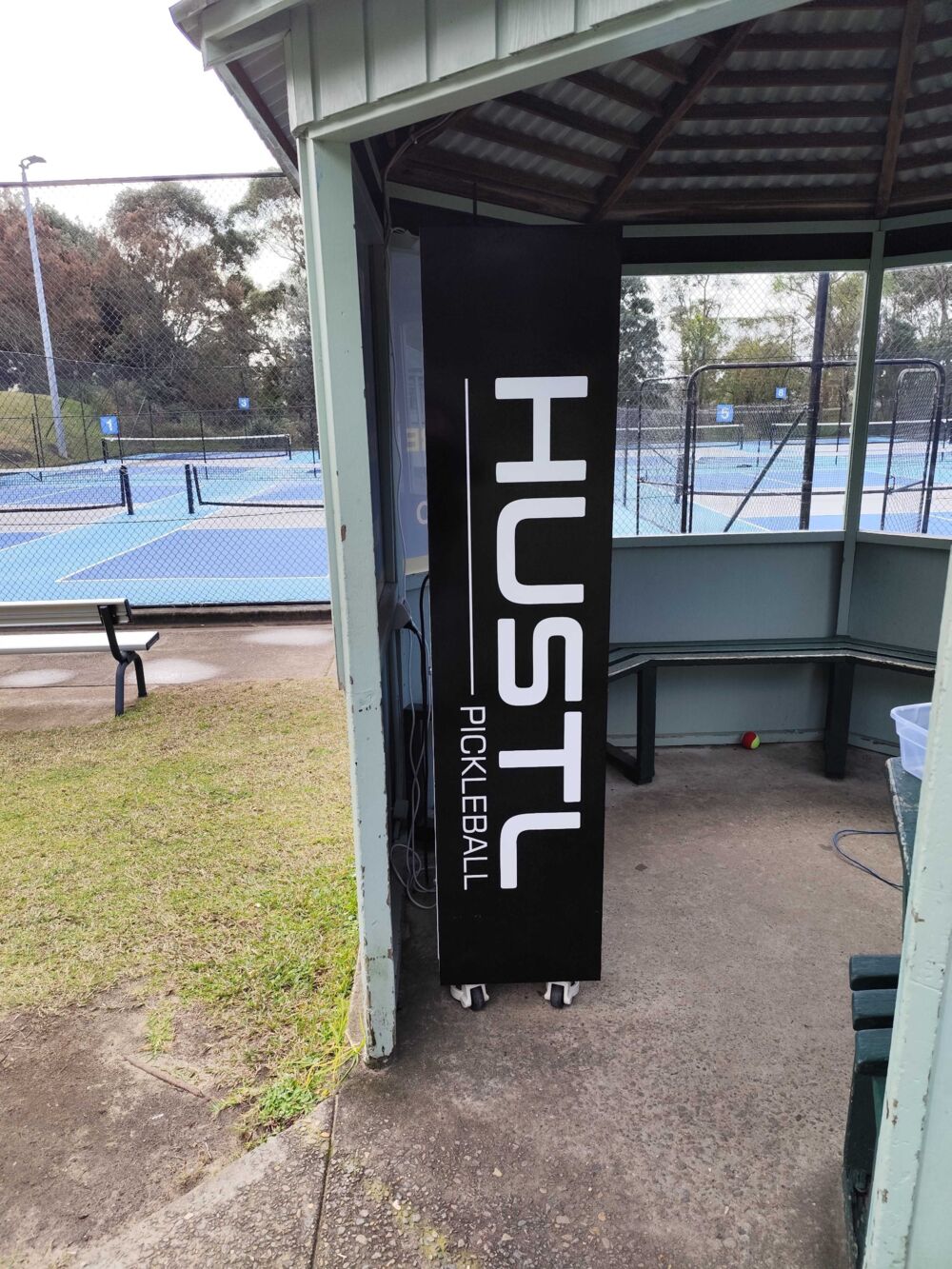
A shelter should overhang the front far enough that rain blown in at an angle does not reach the open cells, and leave room behind for the service door. Note that our castors are designed for short repositioning on a smooth surface. For moves across asphalt or gravel, use a pallet jack.
Power and electrical safety
- A dedicated circuit sized for the locker’s load. Allow for the start-up surge if the build has chilled cells or heating pads.
- Residual-current protection. In the United States, the National Electrical Code section 210.8(B) requires GFCI protection for receptacles installed outdoors at sites other than dwelling units. Other countries have their own residual-current (RCD) rules. A local electrician applies them.
- Weatherproof connection. Use an outdoor-rated outlet or a hard-wired, sealed entry, with cable entering from below.
- Supply voltage. Confirm the site voltage at order. See power, voltage and market compliance.
On-site installation is optional. It is done by your own contractor or, in some regions, provided through a local distributor. KioskForce support is by email.
Connectivity and what happens offline
Site Wi-Fi rarely reaches a courtside or car-park position reliably, so most outdoor lockers use 4G. The L180-10C ships with Ethernet as standard, with Wi-Fi and 4G/5G as options. A 4G telemetry data plan typically costs $5–10 per month per machine. Mount the antenna where the steel cabinet does not shield it.
Outdoor positions also drop connections more often, so ask how the locker behaves offline:
- On the KioskForce delivery platform, every instruction is cached server-side for 30 seconds and acknowledged by the machine. If the connection drops and returns within that window, pending instructions are replayed in order. An instruction that is never acknowledged is logged as an error.
- Equipment issue to staff checks entitlements at the moment of issue, so it needs the connection. Plan how the site works during an outage.
- Card and QR payments depend on the payment terminal’s own connection. See payments for offline behaviour by method.
Vandal resistance and security
An unattended outdoor locker will be kicked, levered and occasionally attacked. Design for it:
| Measure | What to specify |
|---|---|
| Impact rating | An IK code under IEC 62262. Five impacts at the rated energy: IK07 is 2 J, IK08 is 5 J, IK09 is 10 J, IK10 is 20 J, and IK11 (added in 2021) is 50 J. Specify it for the screen and any glazing, not just the steel |
| Fixing | Anchor to the slab or wall with fixings reached only from inside the cabinet. Castors are for sheltered or seasonal positions |
| Doors and hinges | No exposed hinge pins or screw heads. Tight door gaps resist pry bars |
| Glazing | Polycarbonate, not glass, where doors are see-through |
| Cash | None. Cashless payment removes the main reason to attack a machine |
| Visibility | Lit, overlooked and covered by a camera where possible |
| Monitoring | Door-open and offline alerts. The per-cell audit log records every opening |
Chilled and heated cells outdoors
Temperature-controlled cells are harder outside, because the sun adds to the load the refrigeration has to remove.
- Chilled cells can be supplied to order as a custom build, quoted per project. For an outdoor position, give us the hottest expected day and whether the cabinet will be in direct sun, so the cooling is sized for the real load. Keep the condenser’s air path clear and shaded. For how chilled lockers work and the food-safety temperatures, see refrigerated lockers.
- Heated cells: KioskForce delivery lockers offer an optional per-cell heating pad, with active ventilation and ultraviolet sanitising as standard. Delivery lockers have no refrigeration. For hot holding, see food pickup lockers.
- Every door opening lets the cold out, and outdoors the air coming in can be 40 °C. Small cells and short door-open times matter more outside than in a lobby.
Certification for outdoor machines
In North America, vending machines are evaluated to UL 751. Its revised requirements (Edition 9, revision of 18 December 2024) took effect on 12 June 2026. Its scope says machines are intended for indoor use only, unless the manufacturer designates them for outdoor use or use in a protected location, in which case they are investigated for that use. The December 2024 revision also added requirements on UV radiation systems. If a locker sells goods and will stand outside, tell the certifier that it is designated for outdoor use. See UL 751 and vending certification. KioskForce builds to the certification requirement you state. We do not certify a site’s compliance.
This is a summary for planning, not legal advice. Rules change; confirm with the regulator or certifier where the machine will stand (as of October 2026).
What to specify if you are buying one
Describe the position in plain words and attach a photo. That tells us more than a rating chosen in advance. Then state:
- Exposure: sheltered or open, which way it faces, and whether it will be hosed down.
- Ratings required: the IP rating (and for which parts), the IK rating, and any certification your market or landlord requires.
- Climate: the coldest and hottest expected temperatures, and coastal or industrial atmosphere.
- What goes in the cells, and any temperature limits on the contents. Chilled or heated cells are a build-time decision.
- Power and network: where the supply is, and whether 4G coverage at the spot is good.
- Fixing: slab, wall or castors.
The outdoor rating is set when the cabinet is built. Start from the smart locker guide, try a layout in the configurator, check price bands on vending machine cost, or contact us. Modified standard builds take 4–6 weeks and custom builds 8–12 weeks.
Where an outdoor locker is the wrong answer
- If an indoor position is available, use it. A lobby, a foyer or a building undercroft avoids most of this page.
- Contents that cannot take heat, such as some medicines and batteries, in an unshaded position without temperature control.
- Very high-risk unsupervised sites, where even a hardened cabinet will be attacked. Put the locker inside the secure line, for example in a lobby with controlled access.
- Positions with no power and no signal. An offline locker cannot check credentials or report events, and an outdoor one makes that worse.
Frequently asked questions
What IP rating does an outdoor smart locker need?
It depends on how exposed the position is. A locker under a solid canopy or in an open-sided shelter is usually specified against splashing water and dust, which in IEC 60529 terms points to a rating around IP54. A fully exposed locker that takes driving rain or is hosed down is usually specified against water jets and dust ingress, around IP55 to IP65. Decide which parts need the rating: the electronics, screen and reader matter most. State the position and the rating you need when you request a quote.
What do the two digits in an IP rating mean?
Under IEC 60529 the first digit rates protection against solid objects and dust, from 0 to 6, where 5 is dust-protected and 6 is dust-tight. The second digit rates protection against water, from 0 to 9, where 4 is splashing from any direction, 5 is water jets from a 6.3 mm nozzle, 6 is powerful jets from a 12.5 mm nozzle, and 7 is temporary immersion. An X means that property was not tested. The ratings are not cumulative beyond 6, so an IPX7 product has not necessarily passed the jet tests.
Can a smart locker stand in direct sun?
It can, but sun is the hardest outdoor condition for a locker, harder than rain. Environmental classes for unsheltered equipment, such as ETSI EN 300 019-1-4, design for solar radiation of 1,120 watts per square metre on top of the air temperature. That heats the cabinet surface, the screen and the electronics well above ambient, and degrades plastics and coatings over time. A shade structure, or a position facing away from the equator and out of the afternoon sun, usually does more than any material choice.
How are outdoor lockers powered and connected?
From a mains outlet with residual-current protection fitted by your electrician to local wiring rules. In the United States, the National Electrical Code requires GFCI protection for outdoor receptacles at non-dwelling sites. For connectivity, most outdoor lockers use 4G because site Wi-Fi rarely reaches a courtside or car-park position reliably. KioskForce cabinets support Ethernet, Wi-Fi and 4G/5G depending on the model, and the delivery platform caches and replays door instructions if the connection drops briefly.
How do you make an outdoor locker vandal resistant?
Specify impact resistance as an IK code under IEC 62262, which runs from IK01 at 0.14 joules to IK10 at 20 joules, with IK11 at 50 joules added in 2021. Fix the cabinet to the slab or wall with anchors reached only from inside, avoid exposed hinge pins and screw heads, use polycarbonate rather than glass for any glazed doors, keep cash out of the machine, and place it where it is lit and overlooked. Door-open alerts and the audit log tell you when something is wrong.
Can outdoor lockers have refrigerated cells?
Chilled locker cells can be supplied to order as a custom build, quoted per project. Outdoors, the refrigeration has to be sized for the hottest day and direct sun on the cabinet, not an indoor lobby, so shade and ventilation around the condenser matter as much as the cabinet. KioskForce delivery lockers are a separate product without refrigeration; they have per-cell ventilation, ultraviolet sanitising and an optional heating pad.
Are KioskForce lockers used outdoors?
Yes. KioskForce equipment-hire lockers use polycarbonate doors and weather-resistant construction for courtside installation, and one courtside unit runs year-round in an open-sided shelter beside outdoor courts. Heavy-duty castors let the venue move it under cover out of season. Click-and-collect cabinets can be specified as indoor or outdoor-rated builds. The outdoor rating is set when the cabinet is built, so describe the position when you request a quote.
References
- IEC — “IEC 60529:1989+AMD1:1999+AMD2:2013 CSV, Degrees of protection provided by enclosures (IP Code)”, edition 2.2 (29 August 2013). https://webstore.iec.ch/en/publication/2452
- Wikipedia — “IP code” (summary of IEC 60529 test conditions; accessed 2 October 2026). https://en.wikipedia.org/wiki/IP_code
- Wikipedia — “EN 62262” (IK code impact energies, IK11 added 2021; accessed 2 October 2026). https://en.wikipedia.org/wiki/EN_62262
- NEMA — “NEMA Enclosure Types” (definitions from NEMA 250-2003; approved November 2005). https://www.nema.org/docs/default-source/products-document-library/nema-enclosure-types.pdf
- ETSI — “EN 300 019-1-4 V2.1.1: Classification of environmental conditions; Stationary use at non-weatherprotected locations” (November 2002). https://www.etsi.org/deliver/etsi_en/300001_300099/3000190104/02.01.01_40/en_3000190104v020101o.pdf
- Intertek — “Standards Update Notice: UL 751, Vending Machines (UL 751:2016 Ed. 9, revised 18 December 2024)” (issued 7 July 2025; effective date 12 June 2026). https://w3inte.intertek.com/siteassets/resources/sun/2025/ul-751-cc-sun-rev-12-18-2024-ed-6-12-2026.pdf
- Electrical License Renewal — “210.8(B) GFCI Protection, Other Than Dwelling Units” (NEC text, item (4) Outdoors; accessed 2 October 2026). https://www.electricallicenserenewal.com/Electrical-Continuing-Education-Courses/NEC-Content.php?sectionID=1425
Related
- Smart lockers: how they work, types and cost: the cluster guide
- Refrigerated lockers
- Parcel lockers for apartment buildings
- Click and collect lockers
- Smart locker software
- Gym, sports and gear lockers: the courtside hire locker in use
- Food and parcel delivery lockers
Talk to us about an outdoor locker
Send a photo of the position, which way it faces, whether it is covered, what the cells will hold and the ratings you need. We will come back with a cabinet specification and a price.
Project brief · 60 seconds
What are we building together?
Three quick steps. Your brief goes straight to the engineers who design, build and support KioskForce systems.

