
Description
The Challenge
Baked by Keiran is a premium Sydney bakery whose bread sells fast every morning. The team wanted to keep fresh bread available throughout the day while creating a purchasing experience that felt distinctive, convenient, and consistent with its bakery brand.
A conventional staffed counter places product selection, payment, and collection into the same service flow. The bakery’s idea was to create an additional self-service channel that could be replenished directly from its production area.
Baked by Keiran’s Bread Wall
Baked by Keiran created what it calls Sydney’s first Bread Wall: a wall filled with fresh bread and restocked throughout the day as products come out of the oven.
The client brought the concept to life using one K180-6C touchscreen kiosk with two L180-10C smart locker cabinets. The system was supplied through our authorised Sydney distributor, with the client, distributor, and KioskForce working together towards the completed installation.
The three connected cabinets provide 26 compartments in total: six in the kiosk and ten in each locker cabinet. Customers browse the available bakery products, pay at the touchscreen, and collect their purchase from the compartment that opens.
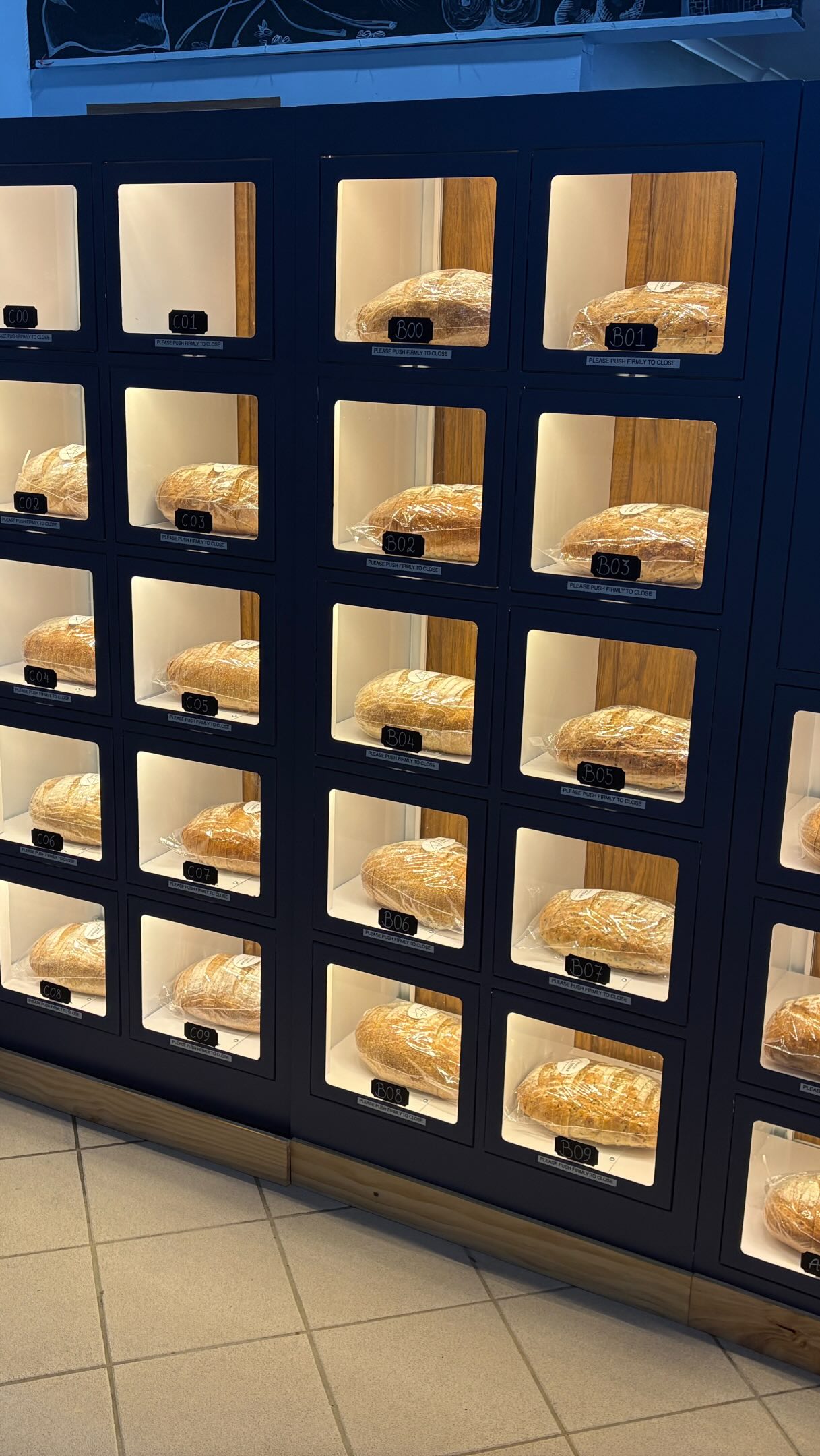
This is not a conventional QSR installation. It is a premium bakery experience built around the theatre of fresh bread: customers can see the loaves in individually illuminated compartments, make their selection at their own pace, and collect directly from the wall. The technology supports the bakery’s product and presentation instead of turning the experience into ordinary vending.
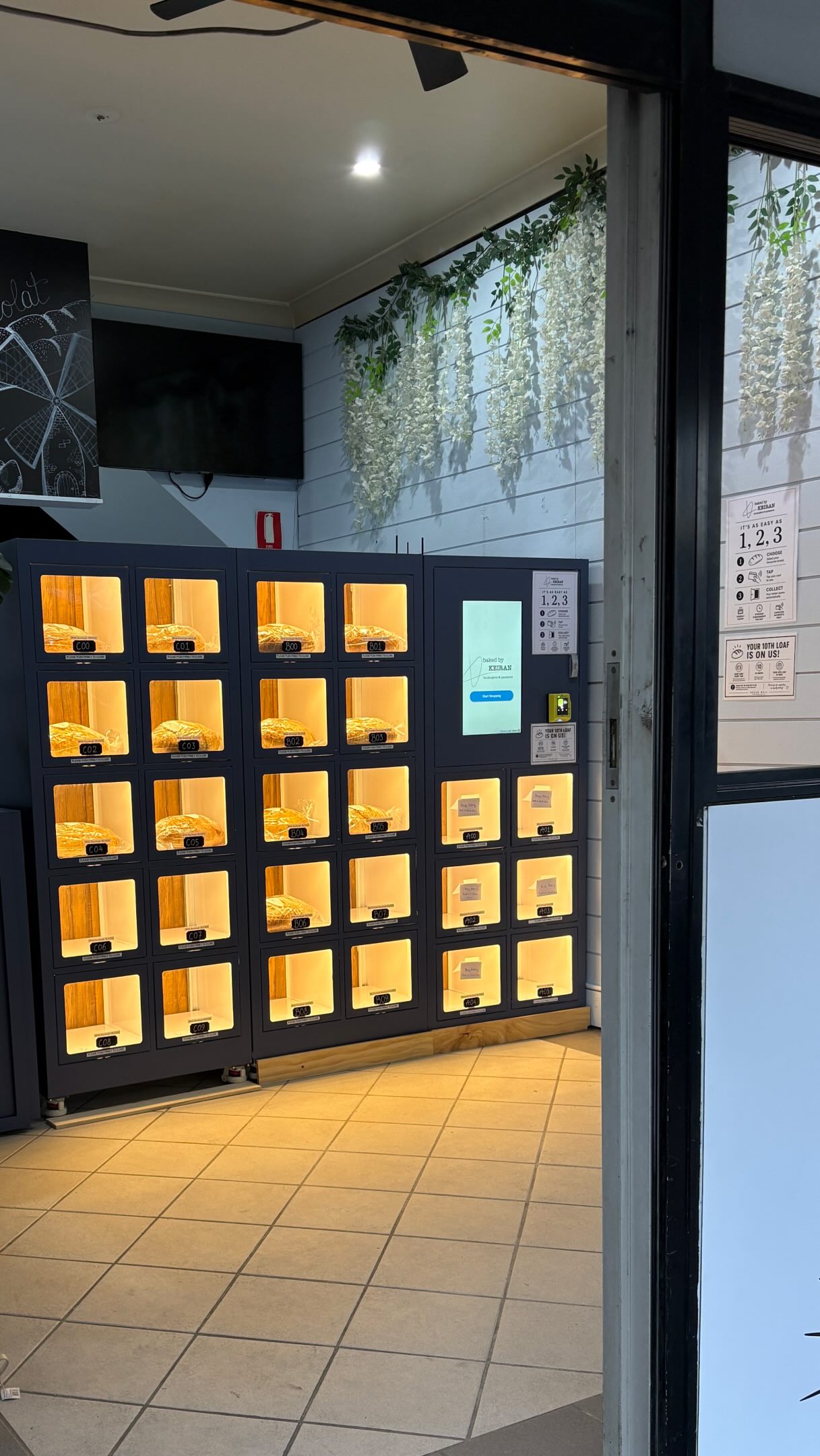
Sell from the Front
The customer side works as a compact self-service shopfront:
- Browse: the touchscreen presents the bread available to purchase, while the illuminated windows let customers see the stocked loaves.
- Select and pay: the customer chooses a product and completes payment at the kiosk.
- Collect: the system unlocks the assigned compartment so the customer can open the front door and take the loaf.
- Close: the compartment door is pushed closed, ready for the next refill and sale.
This keeps selection, payment, and collection together at the front of the wall. Customers can complete a purchase without bakery staff leaving the production area to retrieve each loaf.
Refill from the Back
The service side faces the bakery’s back-of-house workspace. As fresh bread becomes ready, staff can load the compartments from behind instead of carrying each order through the customer area.
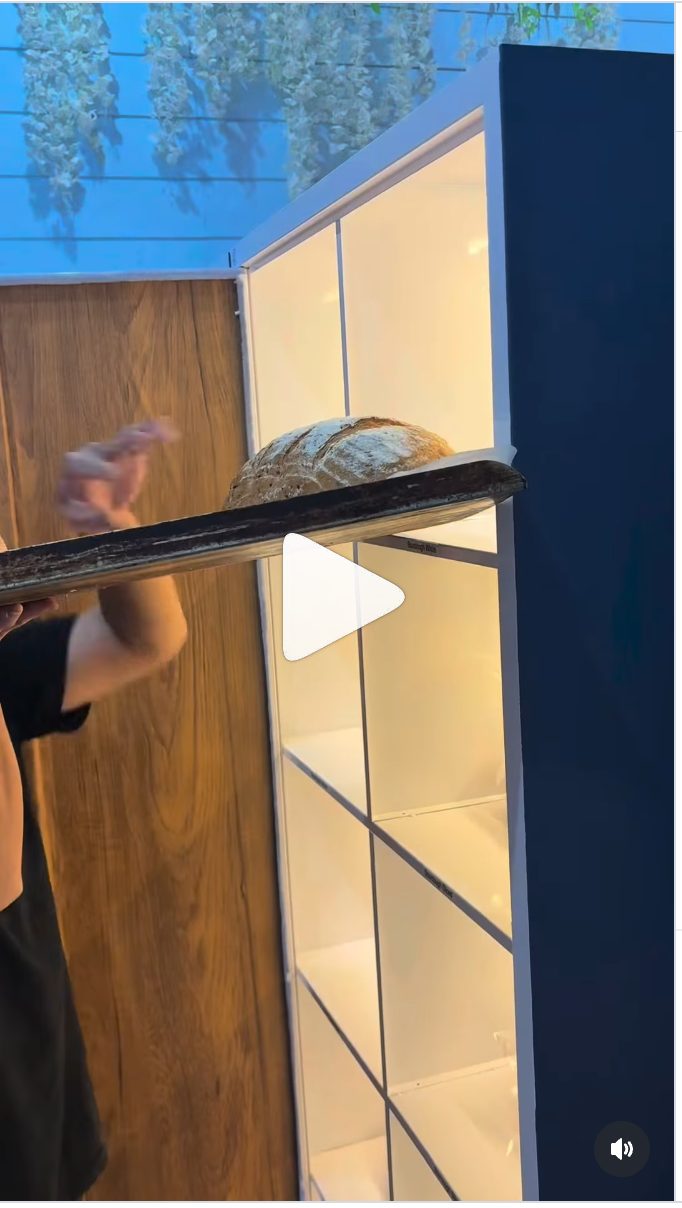
The operating pattern is straightforward:
- Prepare: staff bake, cool, package, and label each loaf using the bakery’s normal production process.
- Load: available compartments are opened from the production side and stocked from the rear.
- Make available: the corresponding products can then be offered through the touchscreen for the next customers.
- Repeat throughout the day: empty compartments can be replenished from behind as new batches come out of the bakery.
Because the refill activity happens on the opposite side from sales, staff and customers do not need to use the same working space. The wall becomes the handover point between production and self-service retail: fresh bread enters from the back and purchased bread leaves from the front.
One Wall, Two Workflows
The installation is positioned between the customer area and the bakery’s back-of-house workspace:
- Customers purchase from the front, so buying can move through the self-service workflow without relying on a cashier to retrieve every order.
- Bakery staff refill from the back, replenishing compartments directly from the production side without entering the customer queue.
- The lockers act as a peak-hour buffer, holding finished products between baking and collection so production and customer demand do not need to move at exactly the same pace.
A Better Customer Experience—and More Capacity
The breadwall separates three jobs that a staffed counter normally performs one at a time: product replenishment, customer selection and payment, and order collection. Staff can keep loading fresh stock from behind while customers complete purchases at the front.
For customers, the illuminated display makes the bread visible and inviting, the touchscreen creates a simple guided purchase, and the opening compartment turns collection into a memorable part of the visit. Customers retain control of their pace while the bakery can continue presenting each loaf as a premium product.
Operationally, the Bread Wall gives the bakery a higher-capacity sales channel during busy periods while keeping staff focused on baking, replenishment, and personal customer service where it is most valuable.
For the bakery’s own introduction to the project, watch Baked by Keiran’s Bread Wall reel on Instagram.
The Same Operating Model Can Apply to QSR
Baked by Keiran is a premium bakery, not a QSR. However, the same front-of-house sales and back-of-house refill pattern can also work in quick-service restaurant (QSR) environments where products are prepared continuously and demand arrives in waves, including:
- Cafés handling breakfast and commuter rushes
- Sandwich, salad, and ready-meal outlets during lunch peaks
- Pizza, burger, and takeaway kitchens staging prepaid orders
- Food halls and high-volume venues that need a compact pickup buffer
Compartment sizes, cabinet count, payment flow, and software can be configured around the menu and expected peak volume. The core principle remains the same: refill from the production side, sell and collect from the customer side.
Planning a Similar Project?
If you operate a premium bakery and want to create a distinctive self-service experience around your products, contact us to discuss your concept. We can help shape the hardware and software configuration and connect you with the appropriate authorised distributor.
We also work with cafés, QSR operators, food halls, and other high-volume venues that want to adapt the sell-from-the-front, refill-from-the-back model to their service flow.
If you are a vending or food-service equipment distributor interested in bringing KioskForce solutions to your market, contact us to discuss distributor partnership opportunities.
Want something like that?
Project brief · 60 seconds
What are we building together?
Three quick steps. Your brief goes straight to the engineers who design, build and support KioskForce systems.

